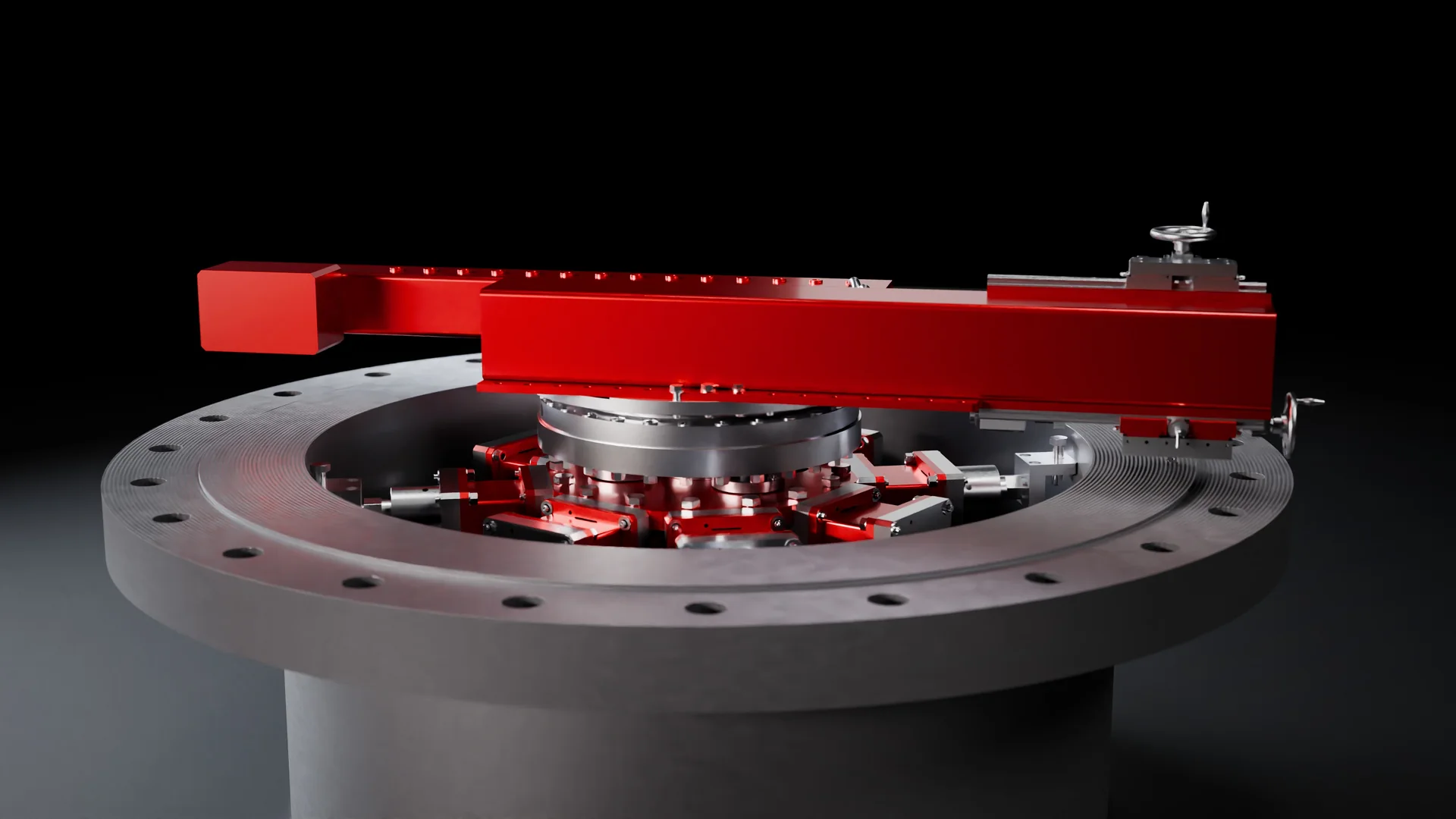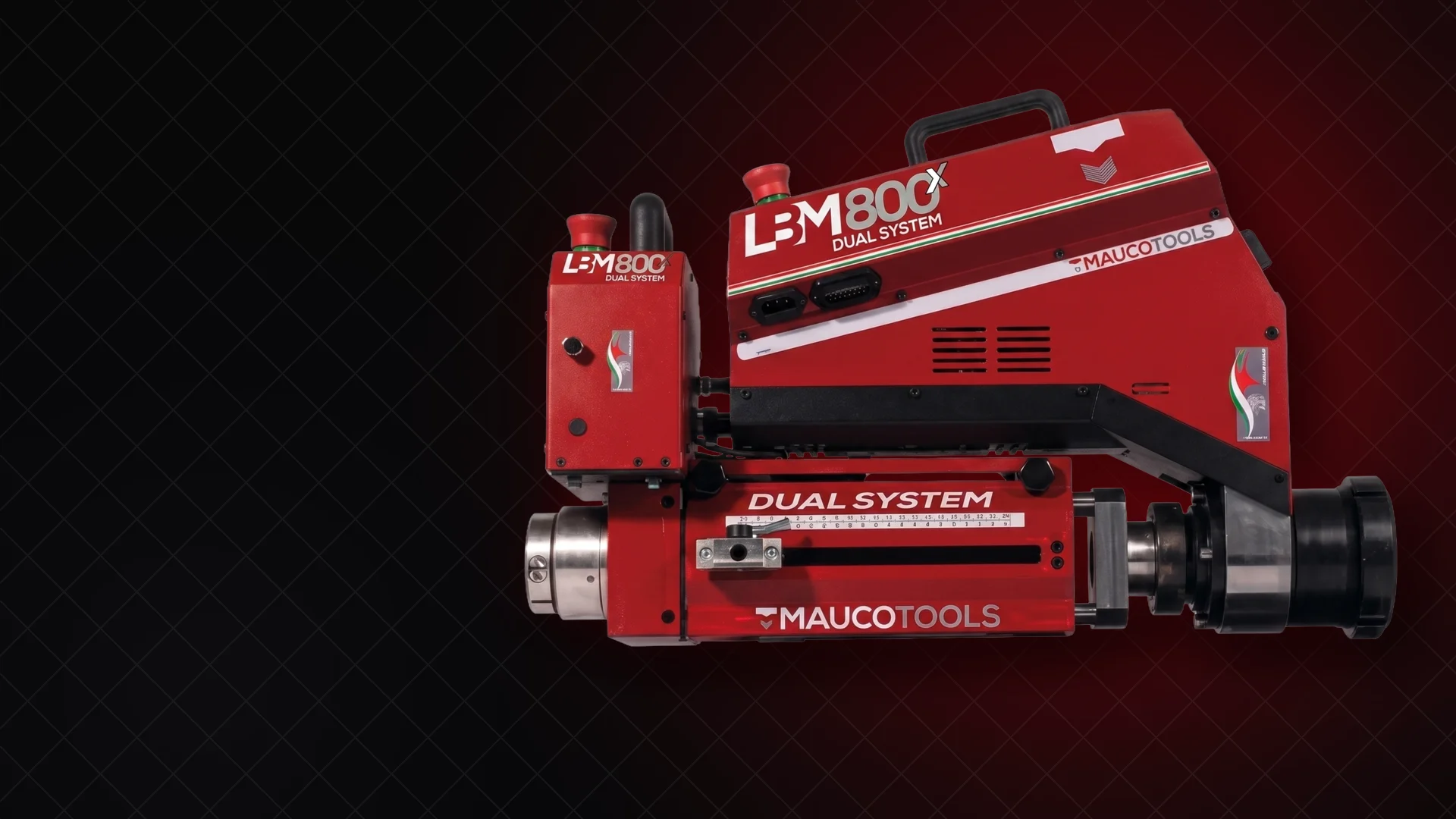
Maucotools extends the LBM series with the LBM800X DUAL SYSTEM, the portable line boring machine with the widest working range in the family: Ø62 to Ø800 mm (2.4 to 31.5 in), boring and weld overlay carried out by the same machine, on the component, in place.
It answers a problem every maintenance team knows. Once the bore to be recovered runs past 600 mm, the only option used to be pulling the assembly out and sending it to a machine shop. The LBM800X moves that ceiling to 800 mm without changing the working method.
Why the last 200 mm matter
Going from Ø600 to Ø800 mm is not a catalogue detail. Above 600 mm sit exactly the components nobody wants to strip out: hydro turbine bearing seats, quarry excavator pin bosses, marine gearbox housings, valve bodies, pin bores on presses and crushers.
These are assemblies weighing tonnes, often mounted at height or down in a turbine pit, where removal means cranes, permits and days of lost output. Machining in situ takes out the whole chain: no strip-down, no transport, no waiting on an outside shop.
The LBM800X works bores from 62 to 800 mm with a 60 mm (2.36 in) boring bar, on the same stiffened architecture as the LBM600X, sized for the torque that large diameters demand.
2300 W drive and four-speed mechanical gearbox
The rotation unit runs a 2300 W electric motor at 220-230 V through a four-speed mechanical gearbox. The four ranges cover the full working envelope:
- G1: 30-90 rpm — large diameters, maximum torque at the tool
- G2: 50-140 rpm — roughing on medium to large seats
- G3: 130-400 rpm — finishing on mid-range diameters
- G4: 210-630 rpm — small bores and finishing passes
The logic is straightforward: the bigger the diameter, the more torque and the fewer revs you need. Four ratios keep the tool inside the right cutting window across the whole Ø62-800 range, instead of running the motor at its limit on a single ratio.
Hydraulic version for sites with no mains supply
Where there is no power on site, or where conditions are too hard on electrics, the LBM800X is available with a 5.5 kW hydraulic drive and a rotation range of 9 to 423 rpm. That is the standard fit for offshore platforms, mines and mobile crews working off a power pack.
Dual System: bore and build up without re-centring
Dual System technology is what the LBM series is built around: one machine does the line boring and the weld overlay, with no need to break down the setup or re-align between the two operations.
On the LBM800X the welding range is wider still than the boring range:
- Internal overlay: 32 to 800 mm
- External overlay: 22 to 800 mm
The cycle on a worn, out-of-round seat is linear: align the bar, build the missing material back up with the overlay, then bore to nominal size. All in one setup, off the same centreline — which is exactly why the finished bore holds tolerance. The method is set out step by step in our guide to weld overlay on worn seats.
Modular: 24 kg and 22 kg, rigged by one operator
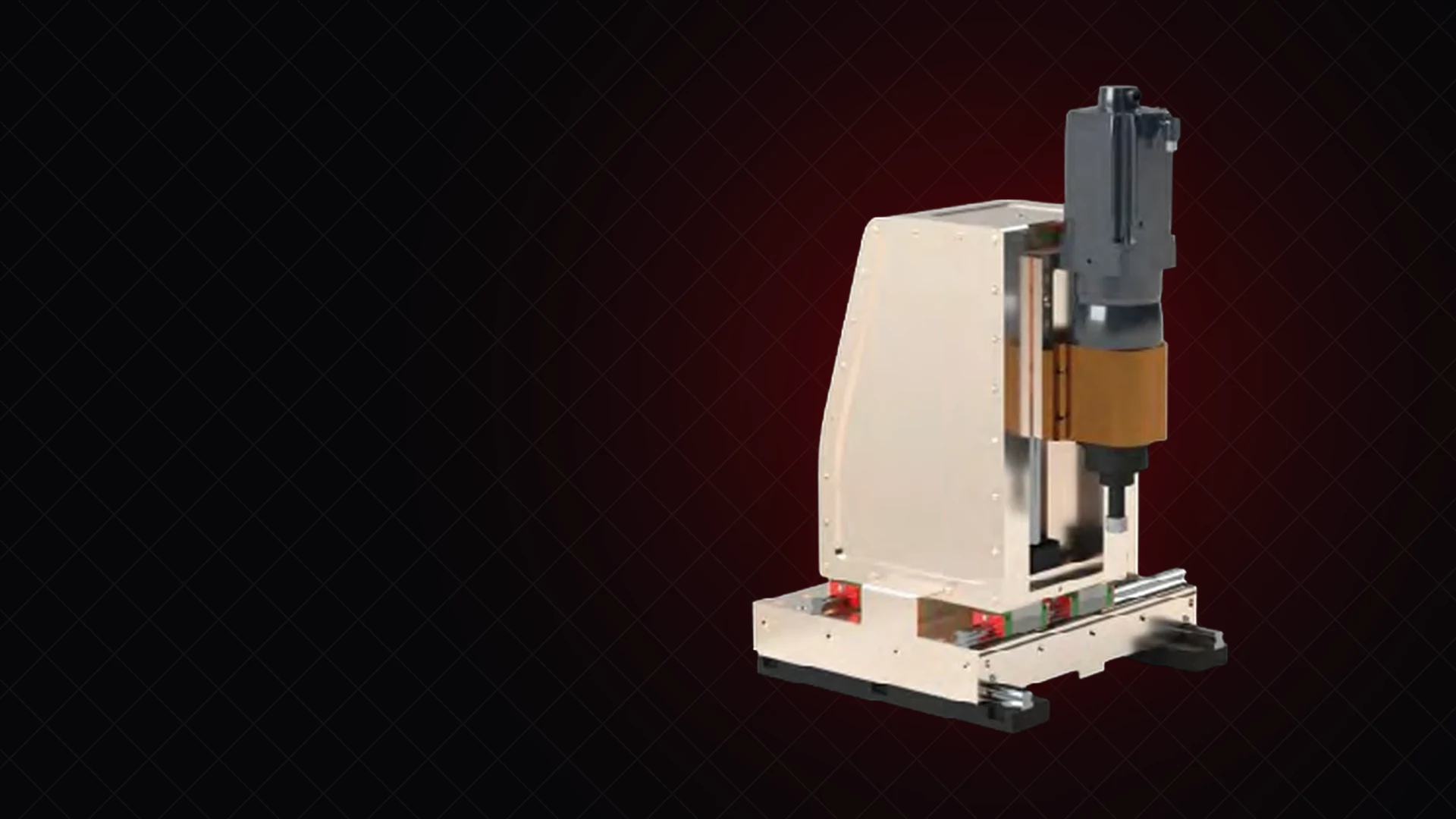
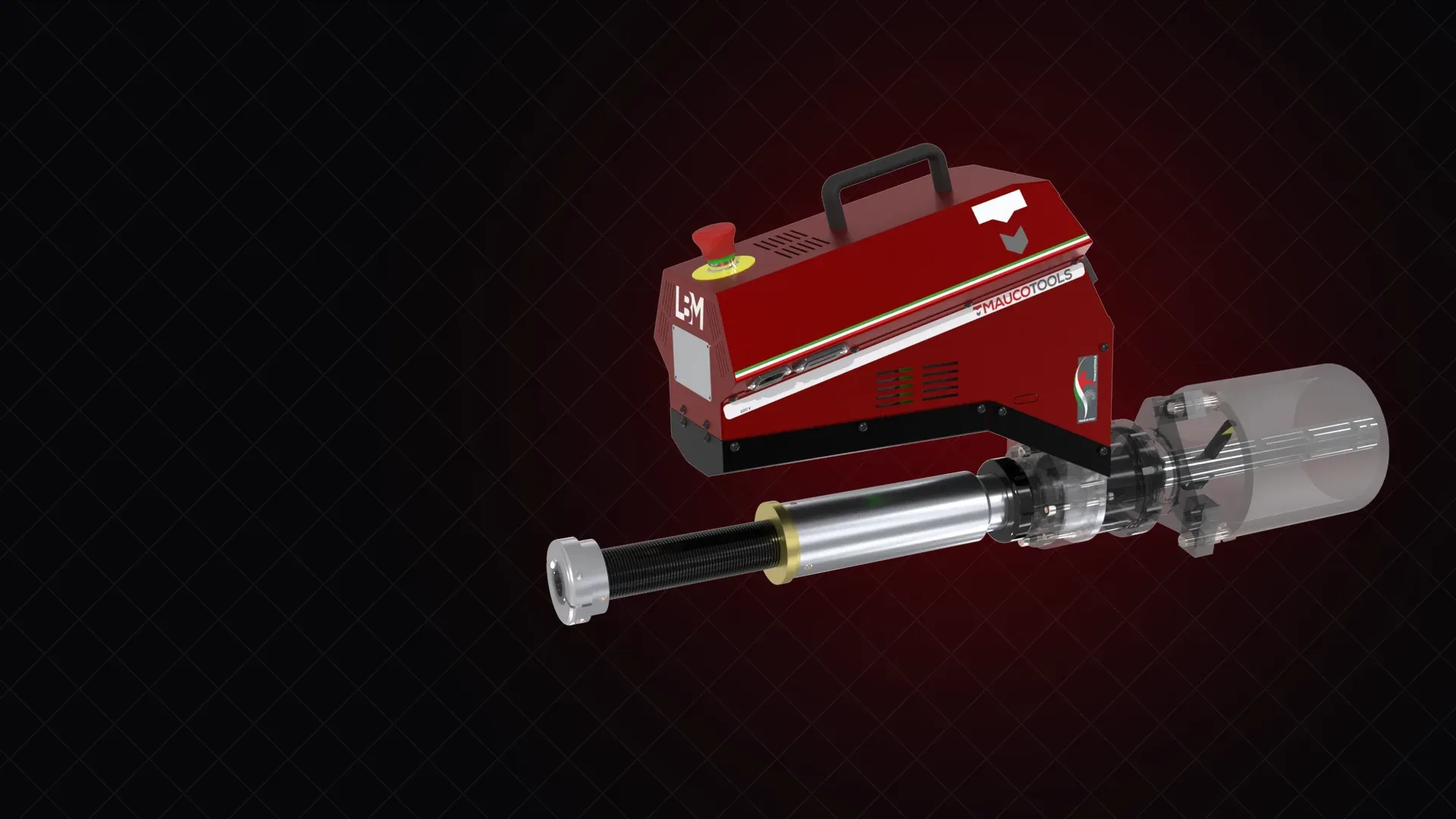
A machine that bores to Ø800 mm sounds like something you need a crew and a crane to handle. It is not, and that is the whole point of the patented split design: rotation and feed are two separate modules, fitted one at a time.
- Rotation module: ~24 kg (53 lb)
- Feed module: ~22 kg (48 lb)
Neither one needs lifting gear to get into position: both are carried by hand, on scaffolding or down inside a pit, and assembled onto the bar once it is aligned. The complete machine and its tooling ship in a case measuring 124 × 82 × 42 cm (49 × 32 × 17 in) at 312 kg (688 lb) all in — it goes in a van, no special transport.
If you are working out which model covers your fleet, the configurator cross-checks diameters, drive type and kits and returns a complete configuration in a few steps.
More than line boring
The LBM800X is a multi-purpose unit. Alongside boring and overlay it also handles:
- Drilling: 10 to 45 mm
- Tapping: 10 to 45 mm
- Facing: optional with Kit FK
- External turning: optional with Kit KTE
In practice one rig covers the whole job: rebuild the seat, re-machine the seating face, pick up the stud holes. Without moving the component, and without calling in a different supplier for every stage.
Where a Ø800 machine actually earns its keep
The sectors where the extended range pays for itself are the ones with big components and expensive shutdowns:
- Hydropower: turbine and wicket gate bearing seats, where downtime is measured in megawatt-hours not produced
- Mining and crushing: eccentric shafts, pin bores on jaw and gyratory crushers
- Oil & Gas: valve bodies, flanged seats, housings on skids and platforms
- Heavy earthmoving: pin bosses on quarry excavators and haul trucks, where the boom stays where it is
- Marine and ports: gearbox housings, bushing bores on quayside cranes
- Steel: rolling mill bearing housings and roll chock bores
In every one of these, the economics are not driven by the cost of the machining but by the hours the plant stands still. The ROI calculator compares an in-situ job against the conventional route — strip-down, transport, machine shop, refit — using your own plant figures.
LBM800X or LBM600X: how to choose
The two machines share the 2300 W motor, the four-speed gearbox and the 60 mm bar. What separates them is the working range: Ø62-600 mm on the LBM600X, Ø62-800 mm on the LBM800X.
The deciding factor is the largest diameter you have to cover, not how often you meet it. If even one job a year goes past 600 mm, that single job is the one you currently subcontract — and it is the one that pays the difference. If the fleet stays under 600 mm, the LBM600X covers everything without over-specifying.
Anyone starting from scratch, who wants the criteria for picking a portable machine by diameter and by sector, will find them in the complete guide to line boring.
Availability
The LBM800X DUAL SYSTEM is available from today in electric and hydraulic versions, backed by the Maucotools service network in more than 90 countries. Designed and built in Italy, in Marcellinara.
Full specifications, the downloadable datasheet and the compatible kits are on the LBM800X product page. For a configuration matched to a specific job, our technical department will put together a dedicated proposal.