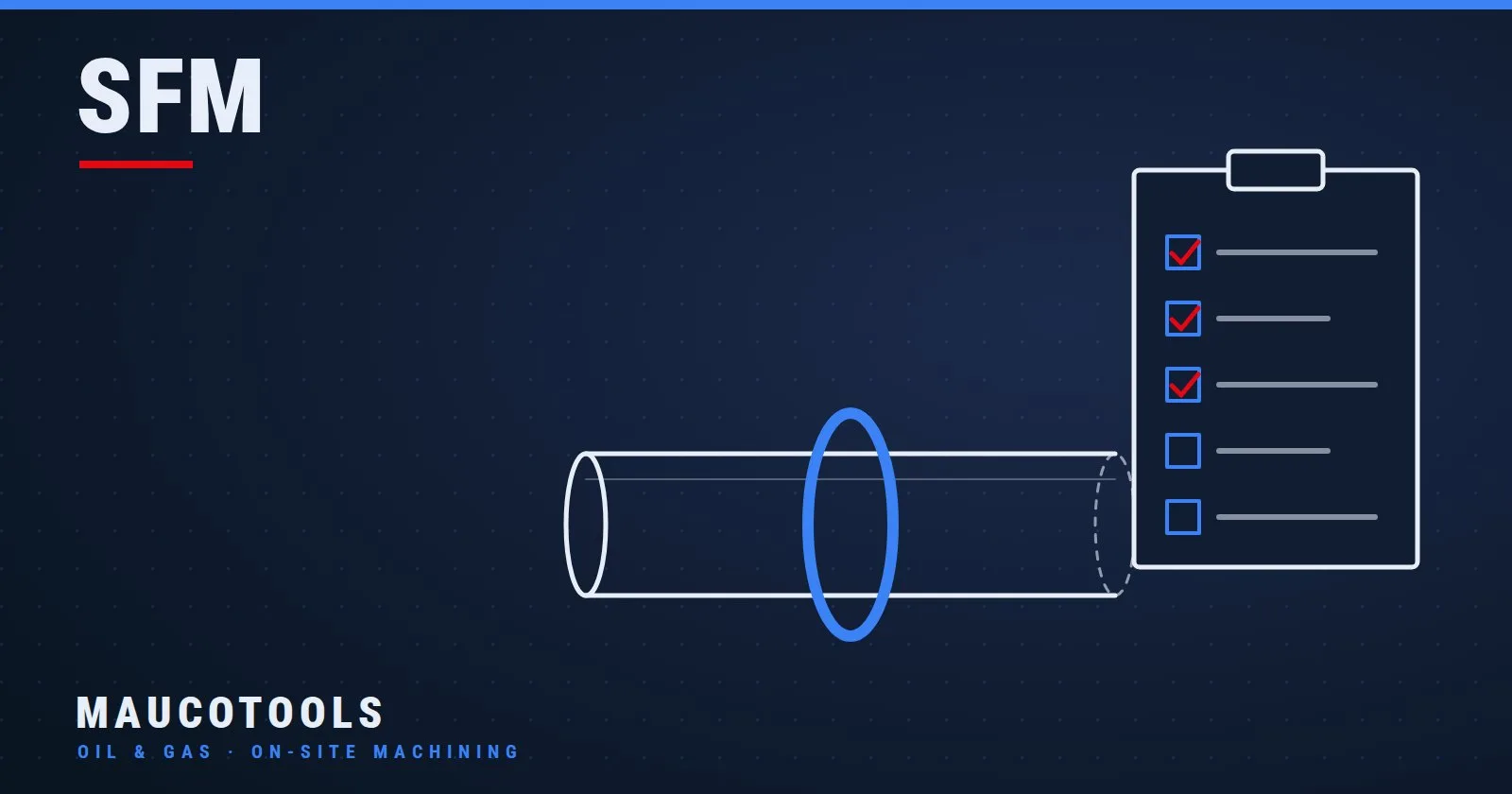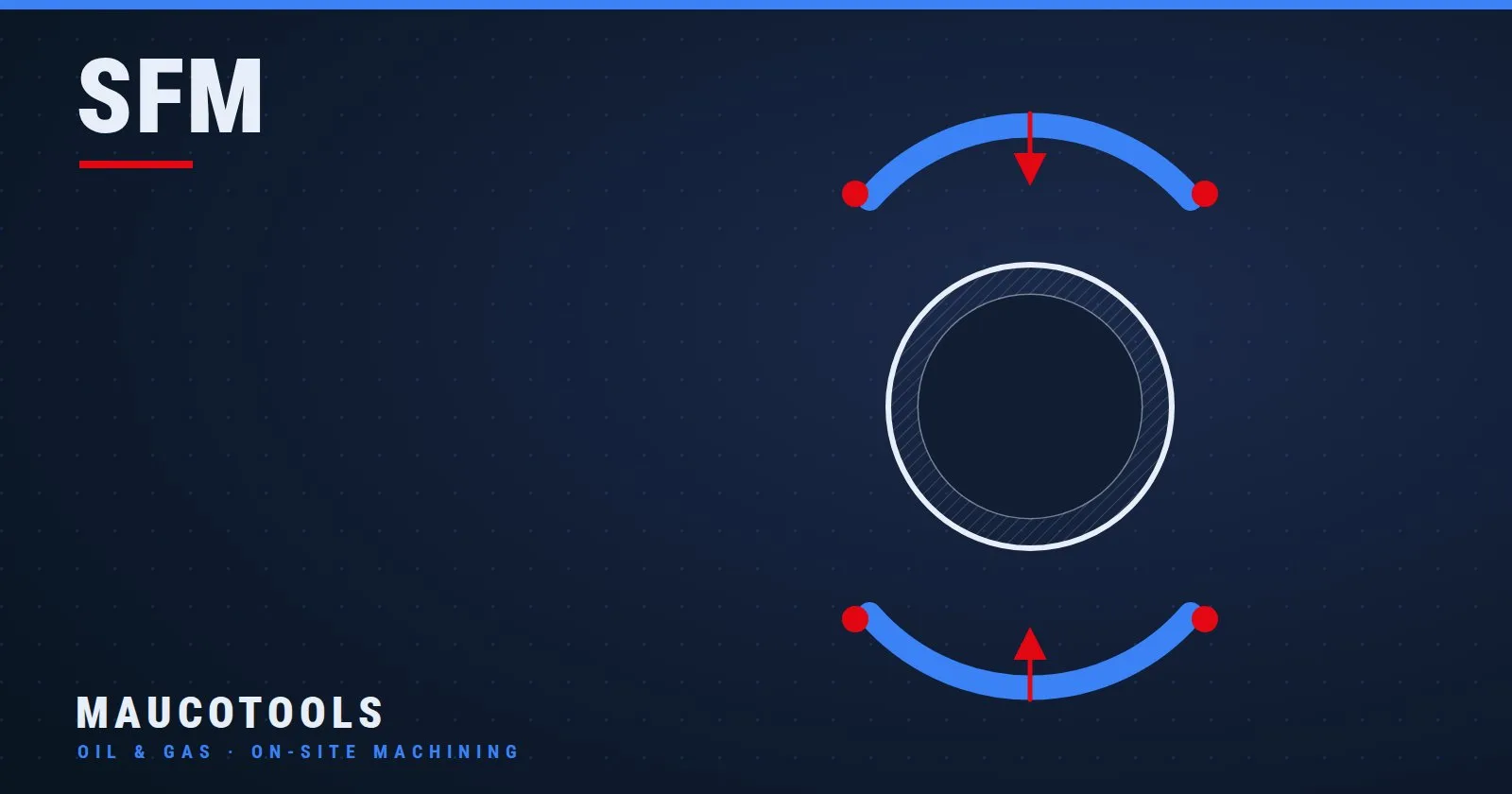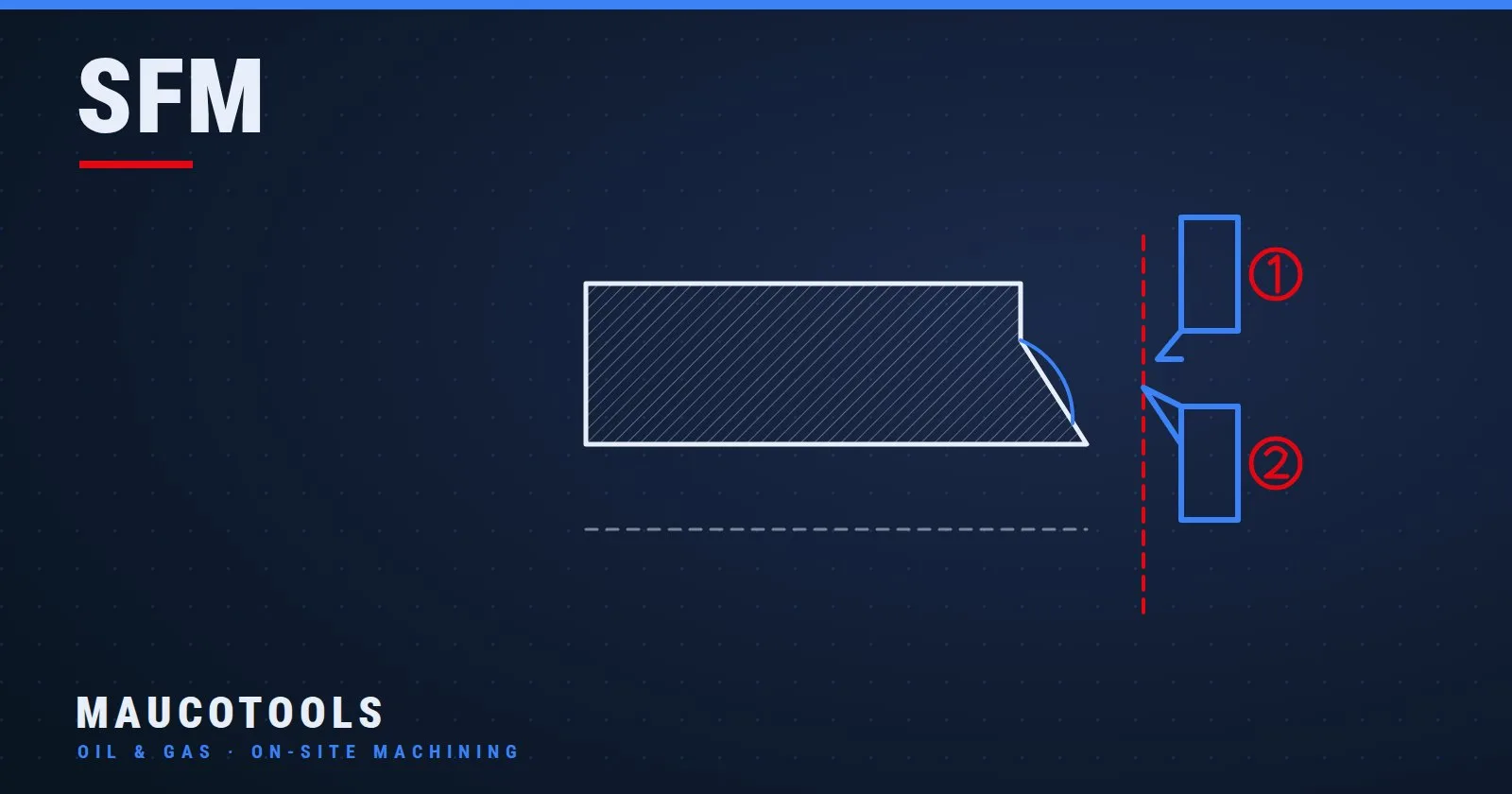
Welding overlay is needed when the wear of a seat exceeds the limit recoverable by boring alone: the surface is rebuilt by depositing filler material, then brought back to nominal size by line boring. With a Dual System machine both phases take place in situ, without a second set-up.
It is the classic situation for anyone maintaining earthmoving equipment, hydropower turbines or Oil & Gas plants: the seat of a bushing or a bearing is out of round, scored or a few millimetres out of tolerance, and boring it further would only enlarge the problem. At that point the choice is between replacing the component, shipping it to a workshop or rebuilding it on site.
This guide explains how to recognise when overlay is genuinely necessary, when instead it is a waste of time, and how to run the complete overlay-plus-boring sequence with a single portable machine, right on the plant. For the fundamentals of the process, the complete guide to line boring is the starting point.
What welding overlay on a worn seat is
Welding overlay is the controlled deposition of filler material onto the surface of a worn seat, in order to rebuild the lost thickness and return the bore to a machinable condition. The deposited material is then removed by boring to size down to the nominal dimension, producing a new, cylindrical surface within tolerance.
In the field this means the seats of excavator bushings and pins, the bearing bores of turbines and gearboxes, and the housings of joints and hinges. These are surfaces working under load and in rotation or oscillation: when the clearance grows beyond the permitted value, the geometry of the bore degrades fast, and with it everything that runs inside.
The decisive point is that overlay is not an alternative to boring: it is the stage that precedes it when there is no longer enough material to remove. The two operations form a single sequence, and the way they are chained together — with one machine or with two separate set-ups — determines the time, precision and cost of the job.
When overlay is truly needed, and when boring alone is enough
The deciding factor is how much material is left and how much geometry has been lost. As a general rule, overlay becomes necessary when:
wear exceeds the limit recoverable by boring alone: enlarging the bore any further would go beyond the range of available oversized bushings or thin the wall too much;
the seat is out of round: boring an oval seat to a larger diameter removes material unevenly and may leave zones that are not cleaned up;
the surface is deeply scored or pitted: grooves from seizure or from the bushing spinning in its seat that a single clean-up pass will not remove;
the bore must be returned to nominal diameter because the spare part is standard and no oversized versions exist (or are not to be managed).
Conversely, overlay is not needed when wear is superficial and uniform: in that case a single boring pass to a slight oversize and a matching bushing are all it takes. Rebuilding a seat by welding when it could be recovered by boring alone simply adds hours of work, heat input and metallurgical risk with no benefit. First you measure — dial gauge, internal micrometer, out-of-roundness readings on several planes — then you decide.
A concrete reference: on the bucket of a Caterpillar 307.5 the job combined boring to size and overlay on the pins, bringing the tolerances back to H7 with an LBM250 straight in the mobile workshop. It is the typical case where the initial measurement showed that boring alone would not have been enough.
The most common mistakes when rebuilding a seat
Failures in welding overlay rarely come from the welding itself: they almost always arise before or after the deposit.
Skipping surface preparation. Depositing onto a greasy, oxidised or work-hardened seat produces inclusions and lack of fusion. The seat must be cleaned and, if necessary, pre-machined with a boring pass to expose sound metal.
Not identifying the base material. Quenched and tempered steels, castings and previous overlays all call for different approaches. Wire, gas and parameters must be chosen according to the specifications of the base material and the filler, not copied from the last job.
Depositing too much material. Every excess millimetre (about 0.04 in) is welding time and then removal time. The aim is a uniform, sufficient stock, not a "generous" seat.
Losing the axis between overlay and boring. This is the most expensive mistake: if the welding machine and the boring machine are set up separately, every removal introduces a re-alignment, with the risk of a finished bore off-axis relative to the coaxial one opposite it.
Overlooking thermal distortion. The heat of the deposit moves the part. Measuring only cold, before and after, avoids boring a dimension that has changed in the meantime.
The last point deserves a closer look, because that is where the choice of machine makes the difference.
The step-by-step sequence: overlay and boring with the same machine
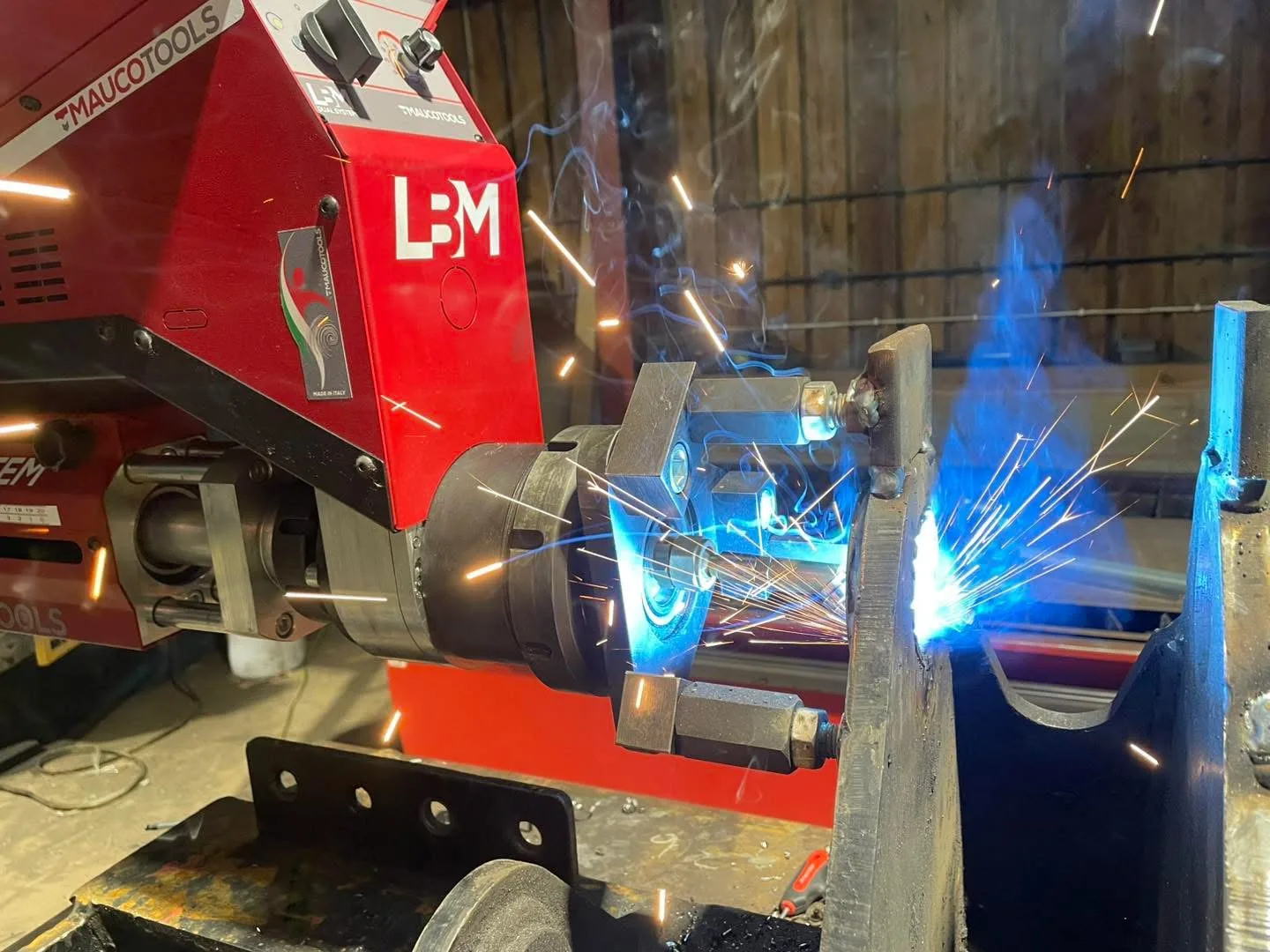
With a Dual System line boring machine, overlay and boring are performed with the same machine, on the same bar, with the same alignment. The welding torch mounted on the bar deposits the material with a controlled helical motion; once the overlay is complete, you switch to the boring tool without removing the machine from the part. The second set-up — and the re-alignment error it brings with it — disappears from the sequence. To decide between a portable line boring and welding machine and a separate bore welder, see the equipment guide.
The typical procedure on a worn seat is as follows:
Measurement and diagnosis. Reading the diameter on several planes and at several heights to quantify wear and out-of-roundness, checking the surface condition and deciding: boring alone, or overlay plus boring.
Mounting and centring the line boring machine. The machine is fixed to the part and the bar is aligned to the theoretical axis of the bore (or to the axis of the coaxial bores that are still good). In documented Dual System cases the set-up takes about 14 minutes.
Preparation pass. A light clean-up boring pass exposes sound metal and regularises the surface that will receive the deposit.
Welding overlay. Spiral deposition of the filler material, with parameters — current, wire, shielding gas — defined according to the specifications of the base material and the consumable. A uniform stock is deposited, sufficient to cover the final dimension.
Controlled cooling and check. The part is allowed to stabilise thermally and the deposit is inspected visually.
Boring to nominal size. Roughing and finishing passes down to the final diameter. Because the axis has never changed, the finished bore is coaxial and within tolerance: in documented Dual System cases you reach up to H7.
Final check and assembly. Measurement of the finished diameter, verification of cylindricity and roughness, fitting of the bushing or bearing.
For work on large earthmoving equipment, heavy joints and Oil & Gas, the reference machine is the LBM400 DUAL SYSTEM: line boring from Ø42 to 400 mm (1.65 to 15.75 in), internal overlay from 32 to 250 mm and external from 22 to 250 mm, drilling and tapping from 10 to 45 mm on the same 40 mm bar, with a 1.8 kW electric or 5.5 kW hydraulic drive and optional kits for facing, turning and threading.
The same logic scales down and up: for smaller bores the LBM250 covers a working range from Ø22 to 250 mm (0.87 to 9.84 in) with modules of about 17 kg (37 lb), each movable by a single operator. And when the stakes rise, the numbers speak for themselves: in the rebuild of the Ø510 bearing seat of a 12 MW Francis turbine, the overlay-plus-boring sequence carried out in situ with an LBM600 put the plant back on the grid in 2 days versus roughly 3 weeks for the traditional method, with an estimated saving of about €45,000.
Materials and preparation: what to define before striking the arc
Overlay is to all intents and purposes a welding operation, and must be treated as such. Before the deposit, a few points must be defined, in agreement with the specifications of the material and the wire:
Base material identification: type of steel, any heat treatment, presence of previous overlays. From this follow the choice of filler and any need for preheating.
Consumable selection: wire and shielding gas compatible with the base material and with the subsequent machining, according to the consumable manufacturer's guidance.
Cleaning and access: seat degreased, dry, free of oxides and paint; work area protected from wind and moisture if operating outdoors.
Thermal management: any preheating, interpass temperature control and slow cooling, always according to the material specifications.
There are no universal parameters: the correct amperage, deposition speed and gas flow rates depend on the material, the diameter and the consumable chosen. What does not change is the method: identify, prepare, deposit uniformly, let stabilise, then bore. A broader picture of how Dual System portable line boring machines fit into the daily work of mobile workshops and maintenance teams is in this dedicated feature.
FAQ on welding overlay
When is overlay preferable to an oversized bushing?
When the bore must return to nominal diameter, when the out-of-roundness or scoring are too deep for a simple bore to oversize, or when managing non-standard spares is not practical. If instead the wear is light and uniform, the oversized bushing remains the quickest and cheapest route.
Can welding overlay be done directly on the plant?
Yes: that is precisely what Dual System portable line boring machines are for. The machine mounts on the component — excavator arm, turbine casing, Oil & Gas structure — and performs overlay and boring in situ, without dismantling or transporting the part to a workshop.
What tolerances are achieved after overlay and boring?
With the sequence carried out without repositioning, in documented cases with Dual System machines tolerances of up to H7 are reached on the finished diameter: in the case of the Caterpillar 307.5 bucket the pin seats were brought back to H7 with an LBM250.
How much material should be deposited?
The minimum needed to cover the final dimension with a uniform stock over the whole circumference. The exact value depends on the amount of measured wear: generous deposits lengthen both the welding and the subsequent removal, without improving the result.
Is a certified welder needed for overlay?
Deposition with a Dual System machine is mechanised: the helical motion is managed by the machine, reducing the reliance on manual skill. What remains essential is the competence to choose materials and parameters according to the applicable specifications and compliance with the welding procedures required by the plant context.
In short: welding overlay comes into play when the measurement says that boring alone is no longer enough — marked out-of-roundness, deep scoring, a nominal dimension to restore. Carried out in sequence with the boring on the same machine, it eliminates the second set-up and returns a coaxial seat within tolerance without stopping the plant for weeks.
To estimate what this difference is worth on your own plant — downtime hours, transport, external machining — the Maucotools ROI calculator is available, with the data of your own maintenance scenario.
Overlay operations carry the risks typical of welding: always work in compliance with the safety rules in force, the required PPE and the manufacturer's instructions.