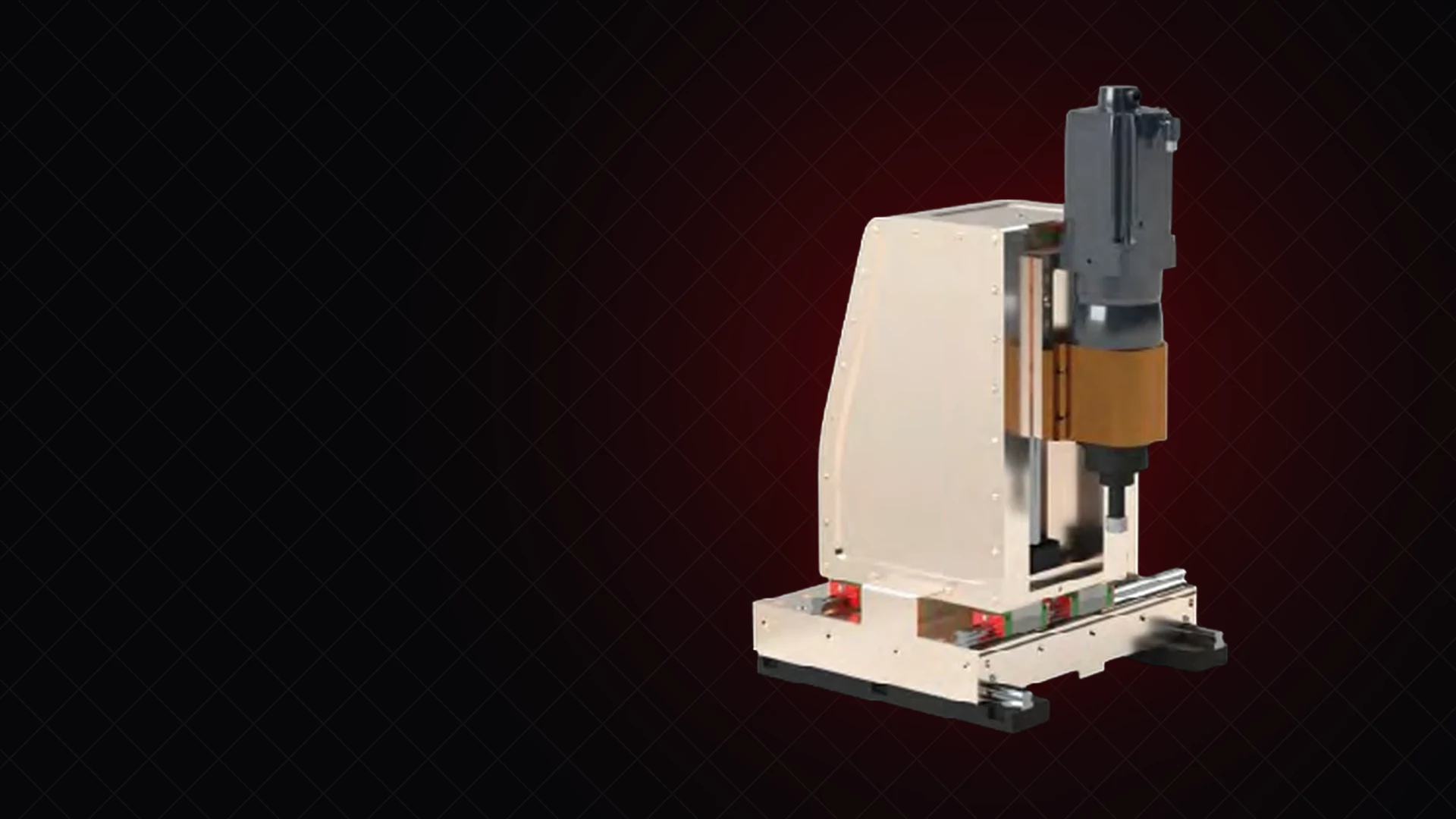
Maucotools introduces the SMM500 CNC, a CNC milling machine designed to work directly on the component: travels of 250 × 250 mm on the X and Y axes and 420 mm in Z, a 3.75 kW HSK63 spindle and SIEMENS SINUMERIK ONE control. Positioning accuracy of ±0.01 mm and repeatability of ±0.005 mm — machine-shop tolerances, delivered in the field.
Until now, anyone who needed to re-machine a sealing face or a series of tapped holes on a component that could not be removed had two options: manual milling, with the accuracy limits that entails, or dismantling everything and shipping it to a machine shop. The SMM500 CNC opens up a third: a compact machining center that comes to the workpiece, is programmed on the spot and runs the cycle automatically.
Why bring CNC to the workpiece
In industrial maintenance, the dominant cost item is almost never the machining itself: it is plant downtime. Removing a gearbox from a rolling mill line, a pump casing from a process plant or a flanged face from a welded structure means cranes, work permits, transport, waiting on an outside machine shop, and reinstallation with realignment from scratch.
In-situ machining eliminates that chain, but until now it ran into a limit: traditional portable equipment consists of manual or semi-automatic machines, suited to straightforward repairs. When the drawing calls for documented flatness, a pocket machined to a precise depth or a hole pattern with toleranced center distances, manual control is not enough.
The SMM500 CNC closes exactly that gap: a true CNC — the same SINUMERIK ONE found on stationary machining centers — on a machine you can transport, fitted with wheels and handles for handling, and set up directly on the component to be machined.
The SMM500 CNC in numbers
- X-axis travel: 250 mm
- Y-axis travel: 250 mm
- Z-axis travel: 420 mm
- Spindle taper: HSK63
- Spindle power: 3.75 kW
- Spindle speed (C axis): 0-4200 RPM
- X/Y feed rate: 0-800 / 1200 mm/min
- Z feed rate: 0-600 / 1000 mm/min
- Positioning accuracy: ±0.01 mm
- Repeatability: ±0.005 mm
Spindle speed and feed rates depend on the gearbox configuration, specified at the ordering stage to match the machining operations you expect to run most. The HSK63 taper is a widespread standard on machining centers: toolholders and cutters are available everywhere, with no dedicated tooling required.
Three machining families, one setup
The SMM500 CNC performs the three machining families that cover the vast majority of mechanical maintenance work:
- Milling: pockets, shoulders, slots, profiles — with dimensions controlled by the program
- Facing: sealing faces, mating surfaces, mounting pads — with the flatness of a CNC cycle
- Drilling and tapping: hole patterns with programmed spacing, threads machined in position
The point is not the individual operation but the sequence: on a real job the three almost always combine — you face the surface, mill the seats, then drill and tap the fixings — and with a CNC they happen in the same setup, from the same work zero. That is what keeps center distances and dimensions in tolerance, not operator skill.
The applications, case by case
The 250 × 250 mm working area per setup, with 420 mm of vertical travel, is sized for the localized machining jobs that dominate in-situ maintenance. These are the use cases the machine was built for.
Sealing faces and flanged surfaces
The most frequent case: a sealing surface that is eroded, corroded or scored and no longer holds the gasket. Valve bodies, pump casings, heat exchanger covers, flanged connections on pressure vessels. CNC facing restores the surface to a documentable flatness, with the correct finish for the gasket type, without removing the body from the plant and without the waviness typical of hand grinding.
Mounting surfaces for gearboxes, motors and pumps
When a gearbox or motor has to be replaced with a different model, or the original mounting surface has deteriorated, the baseplate needs re-machining: surfaces brought to height, with any shim stacks eliminated. Machining the baseplate in place — on a rolling mill line, in a paper mill, on a cement plant mill — avoids disturbing the structure and preserves the original alignment references.
Re-machining after welding
Every weld-overlay repair or structural modification on heavy fabrications leaves surfaces to be dressed back: the welded zone distorts and the dimensions have to be re-established. The SMM500 CNC performs the re-machining directly on the structure — faces, stops, seats — bringing the geometry back to drawing. It is the natural complement to rebuilds carried out with Dual System line boring machines: where the boring machine rebuilds bores and brings them back to size, the milling machine restores the faces and interfaces.
Holes and threads in position
Sheared studs to extract and restore, hole patterns for a new interface, jigs that no longer exist. With a CNC, center distances are not marked out: they are programmed. The result is holes and tapped threads positioned repeatably to the hundredth of a millimeter, ready to accept the new component at first assembly — even when the pattern runs to dozens of holes, exactly where manual marking-out accumulates error.
Seats, pockets and localized slots
Keyseats and keyways, grooves for sealing rings, pockets for sensors or locating blocks, shoulder stops. Jobs that are small in volume but critical on dimension, often on components that could never reach a stationary milling machine: the program guarantees the geometry, whatever position the workpiece is in.
The sectors where the approach pays off most
- Power generation and hydro: mating faces on turbine casings, sealing surfaces on distributors and covers, generator interfaces — components that never leave the plant
- Oil & Gas and chemical: flanged surfaces on skids, valve bodies, manways and nozzle connections on pressure equipment
- Steel and paper mills: gearbox and bearing mounts on lines that stop only a few hours a year
- Marine and ports: auxiliary machinery foundations, deck machinery surfaces, hull interfaces and quayside crane interfaces
- Cement plants and mining: repair machining on mills, crushers and conveying structures
- Earthmoving and revamping: attachment and counterweight interfaces, slew surfaces, frame modifications
The common denominator is always the same: components too large, too integrated or too costly to remove, where every day of downtime is worth more than the entire machining job.
The control: SIEMENS SINUMERIK ONE
At the heart of the machine is a latest-generation Siemens package, the same ecosystem found on industrial machining centers:
- SIEMENS SINUMERIK ONE with PLC S7-1500F
- SINUMERIK HT 10 H handheld terminal — the machine is operated right at the workpiece, not from a fixed console
- SINUMERIK Safety Integrated — safety functions built into the control
- Siemens 1FK7 synchronous servomotors with absolute encoders and integrated safety in the drives
- High-precision Made in Italy linear guides and ball screws
For anyone working on plant, that choice counts double: a standard control means programming familiar to any CNC technician, Siemens spares and support anywhere in the world, and an interface that keeps the machine easy to use even in complex, changing working environments. There is no new skill set to build: whoever can program a machining center can program the SMM500.
The SMM500 and the Maucotools machining range
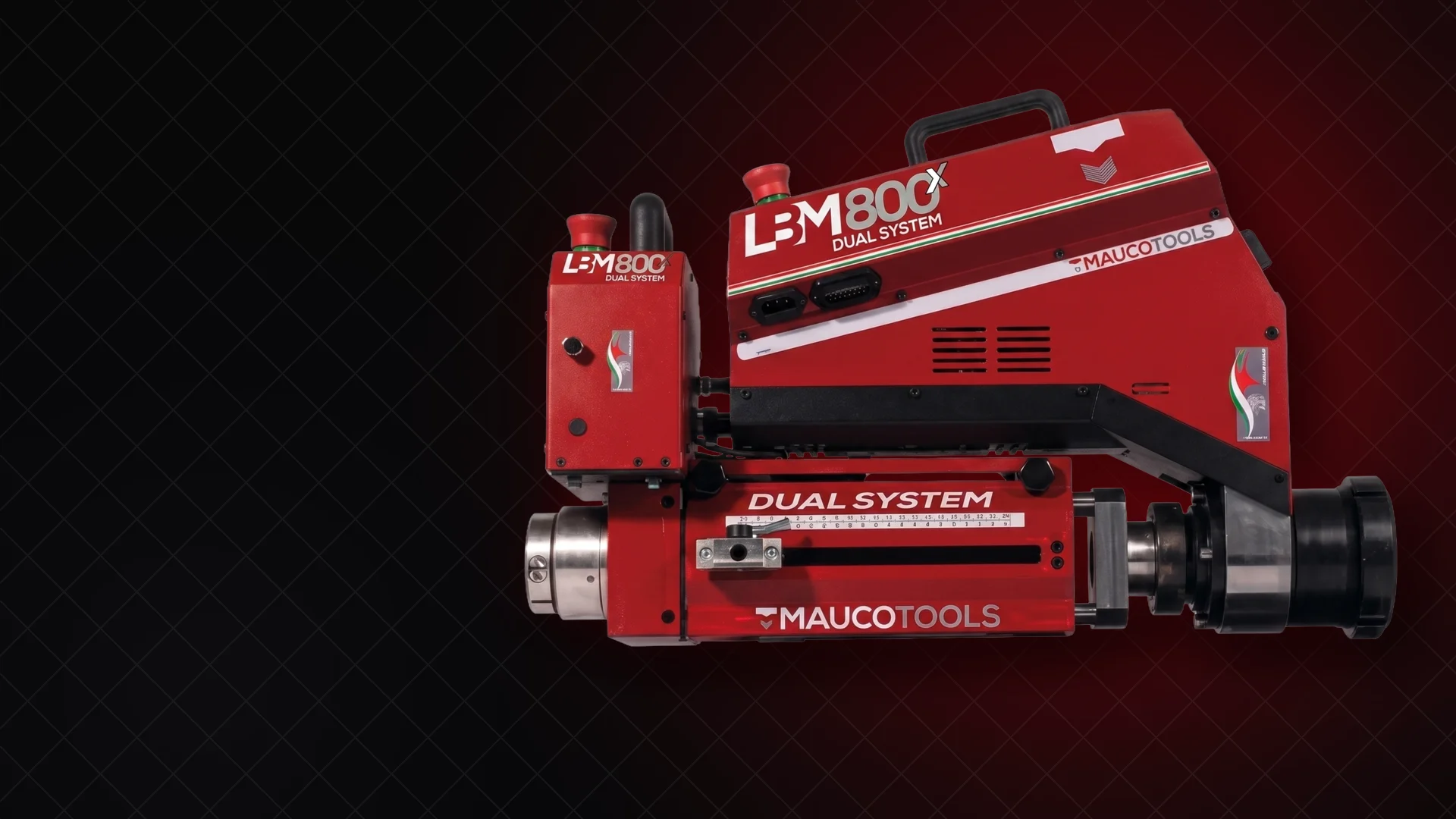
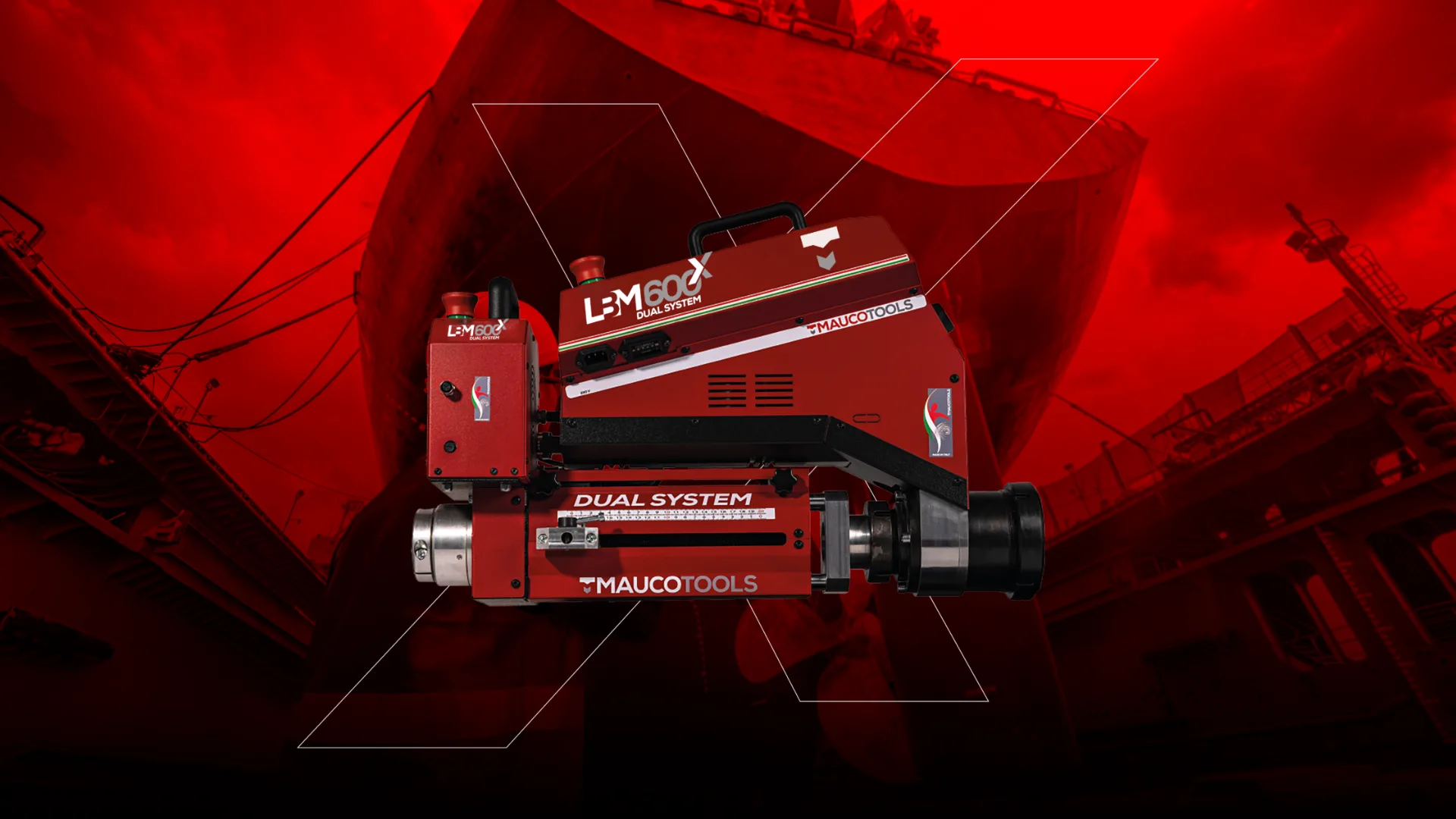
With the SMM500 CNC, the machining division now covers the complete in-situ job. The LBM series line boring machines — up to the LBM600X — rebuild bores and cylindrical seats with line boring and weld overlay; the SMM500 adds CNC-machined faces, pockets and hole patterns. A site equipped with both can do on the spot what used to require the machine shop: seats to size, faces in tolerance, fixings in position.
Does the SMM500 replace the shop milling machine?
No — and that is not its role. It covers localized machining — the working area is 250 × 250 mm per setup — on components that cannot be removed, or are not worth removing. For a transportable part, the machine shop remains the natural route; for everything else, there is now a full-tolerance alternative.
What materials does it machine?
The combinations typical of maintenance work: structural and engineering steels, cast irons, stainless steels. Tools and cutting parameters are selected just as on a machining center, with the flexibility of the HSK63 taper and the 4200 RPM spindle.
Do you need a dedicated programmer?
You need the CNC know-how that most mechanical maintenance crews already have or pick up quickly: the SINUMERIK interface with the HT 10 H handheld terminal is designed for use right at the workpiece, and for recurring cycles — facing passes, hole patterns — the program is written once and reused.
Availability
The SMM500 CNC is available now. The product page carries the full specifications and a downloadable datasheet in five languages; the dedicated on-site milling quote form collects machining type, material and area to be machined, and our engineering team comes back with a tailored proposal. For direct contact: talk to an engineer or find your nearest distributor.