Cold cutting is a flameless, mechanical method of severing pipe in place — no flame, no sparks, no heat-affected zone. An orbital split-frame machine clamps around the pipe and rotates a tool bit that cuts and bevels it in a single pass, which makes cold cutting the standard for repairs and weld prep in live or hazardous areas.
For maintenance teams in oil and gas, power, and process plants, choosing a cold cut over a hot cut is rarely just about the tool. It is about whether you can machine a line without a fire-watch, without a hot-work permit, and without shipping a spool to a shop and waiting weeks to get it back.
The tool behind it is the orbital split-frame machine — a clamshell that wraps the pipe and machines it where it sits. The sections below define cold cutting precisely, give the step-by-step procedure, and set out what a cold cutting method statement should contain.
What is cold cutting of pipe?
Cold cutting is the mechanical machining of a pipe — parting it, and usually beveling the ends — with no heat, flame, or abrasive disc. Instead of burning through the wall, a rotating tool bit shears metal away, so there is no combustion, no molten slag, and no heat-affected zone (HAZ) in the parent material.
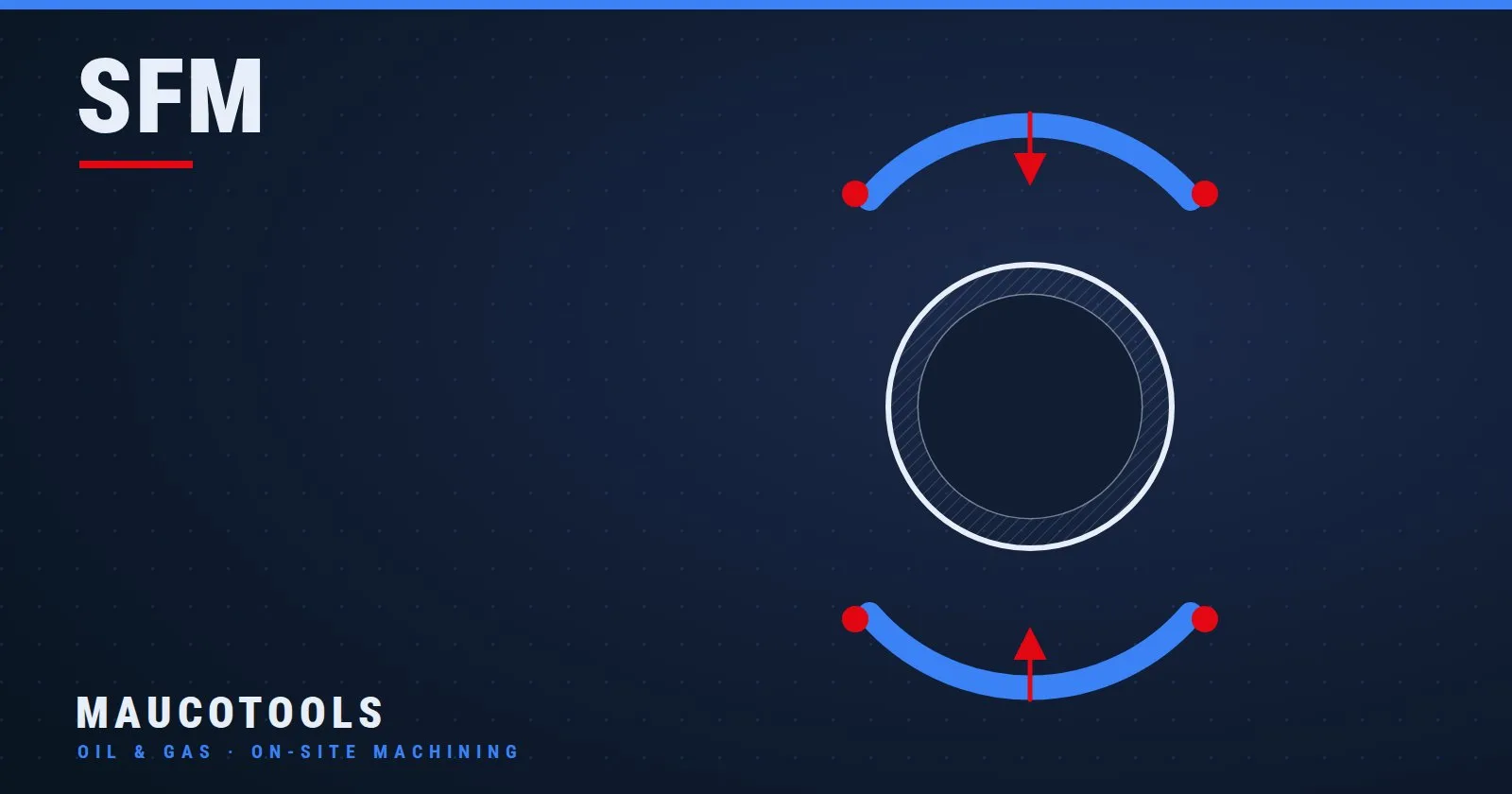
The machine for the job is an orbital split-frame cold cutting machine. It splits into two halves — a clamshell — wraps around an in-line pipe, and clamps concentric to it. A tool holder then orbits the full circumference, feeding in a little on each pass until the pipe is parted, all while the line stays exactly where it is.
Because nothing burns, Maucotools SFM machines run with no gas or abrasive disc consumption and leave no HAZ to distort the metallurgy near the weld. That is what makes cold cutting usable in live and hazardous areas where an open flame is simply not allowed.
Cold cutting vs. hot cutting: why the difference matters
Hot cutting — oxy-fuel, plasma, or an abrasive wheel — is fast, but it drives heat into the pipe. Heat means a heat-affected zone, possible distortion, and an ignition source that demands a hot-work permit and a fire-watch. On a line that still holds product, or in a classified area, that can stop the job before it starts.
Cold cutting removes those constraints:
- No ignition source. Flameless machining means no hot-work permit and no fire-watch overhead in most classified areas.
- No heat-affected zone. The cut face keeps its original metallurgy, so there is no thermal distortion to correct before welding.
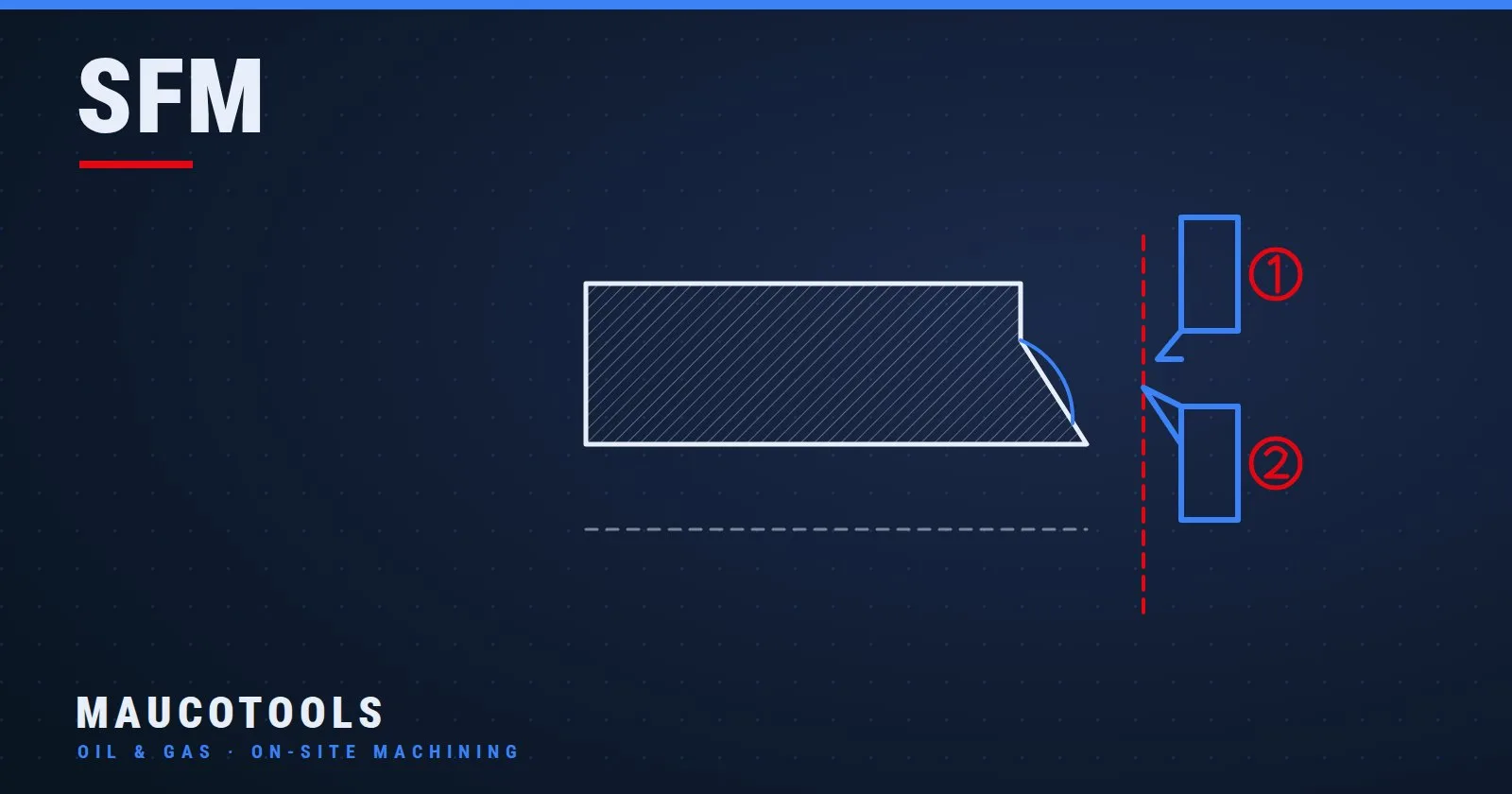
- Weld-ready in one operation. The SFM cuts and bevels at the same time, producing uniform, radiographic-welding-standard bevels ready for fit-up.
- In situ, single operator. No spool removed, no shop, no shipping. The entry SFM-26 (2"–6" pipe) weighs 17.5 kg (38.5 lb), so one operator can mount and run it.
When the job is weld prep only — reworking or re-beveling an existing pipe end rather than parting the line — a dedicated portable pipe beveling machine handles the bevel on its own. For a full sever plus weld prep, the split-frame SFM does both at once.
Cold cutting pipe procedure, step by step
The exact sequence varies with diameter, wall thickness, and drive type, but a cold cut with an orbital split-frame machine follows the same core steps:
- Assess and mark. Confirm the pipe is isolated, drained, and de-pressurized. Measure the outside diameter, verify wall thickness, and mark the cut line square to the pipe axis.
- Mount and clamp the split-frame. Open the clamshell, seat both halves around the pipe at the mark, and clamp the machine concentric to the pipe so it runs true.
- Align and center. Adjust the clamping pads until the frame is square and centered on the axis. A machine that runs off-center gives an angled cut and an uneven bevel.
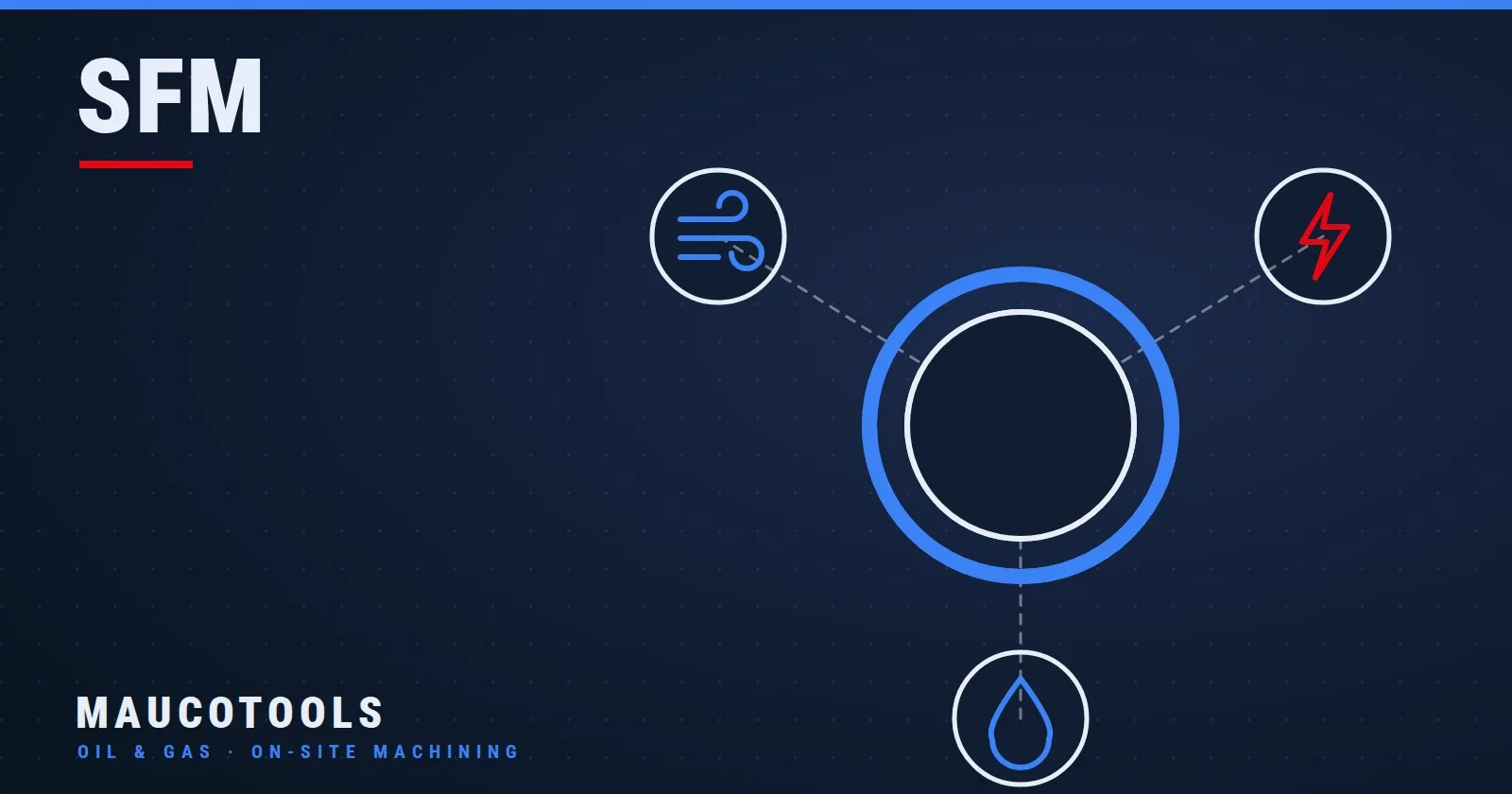
- Set the feed and speed. Fit the cutting and beveling tool bits, choose the drive — pneumatic, electric, or hydraulic — and set rotation and infeed for the wall thickness. The SFM-26, for instance, turns at roughly 34–37 rpm.
- Cut and bevel in one pass. Start the drive and let the tool orbit the full circumference, feeding in progressively. The machine parts the pipe and forms the weld bevel in the same operation — no second setup.
- Deburr and inspect the weld prep. Remove the machine, deburr the edges, and check the bevel angle and land against your welding procedure specification. The face should be clean and uniform, ready for fit-up.
Matching the machine to the pipe is the one decision that shapes the whole job: OD sets the model. Maucotools builds six SFM sizes covering 2"–60" OD, each in pneumatic, electric, or hydraulic drive. You can spec the right SFM for your line by outside diameter and drive.
What a cold cutting method statement contains
A method statement is the written safe-work procedure a contractor produces before mechanical work on a live plant — the document that tells the crew, and the client's HSE, exactly how the cut will be done safely. Maucotools builds the machines; the method statement is the operator's or contractor's own document, but the flameless process is what makes it straightforward.
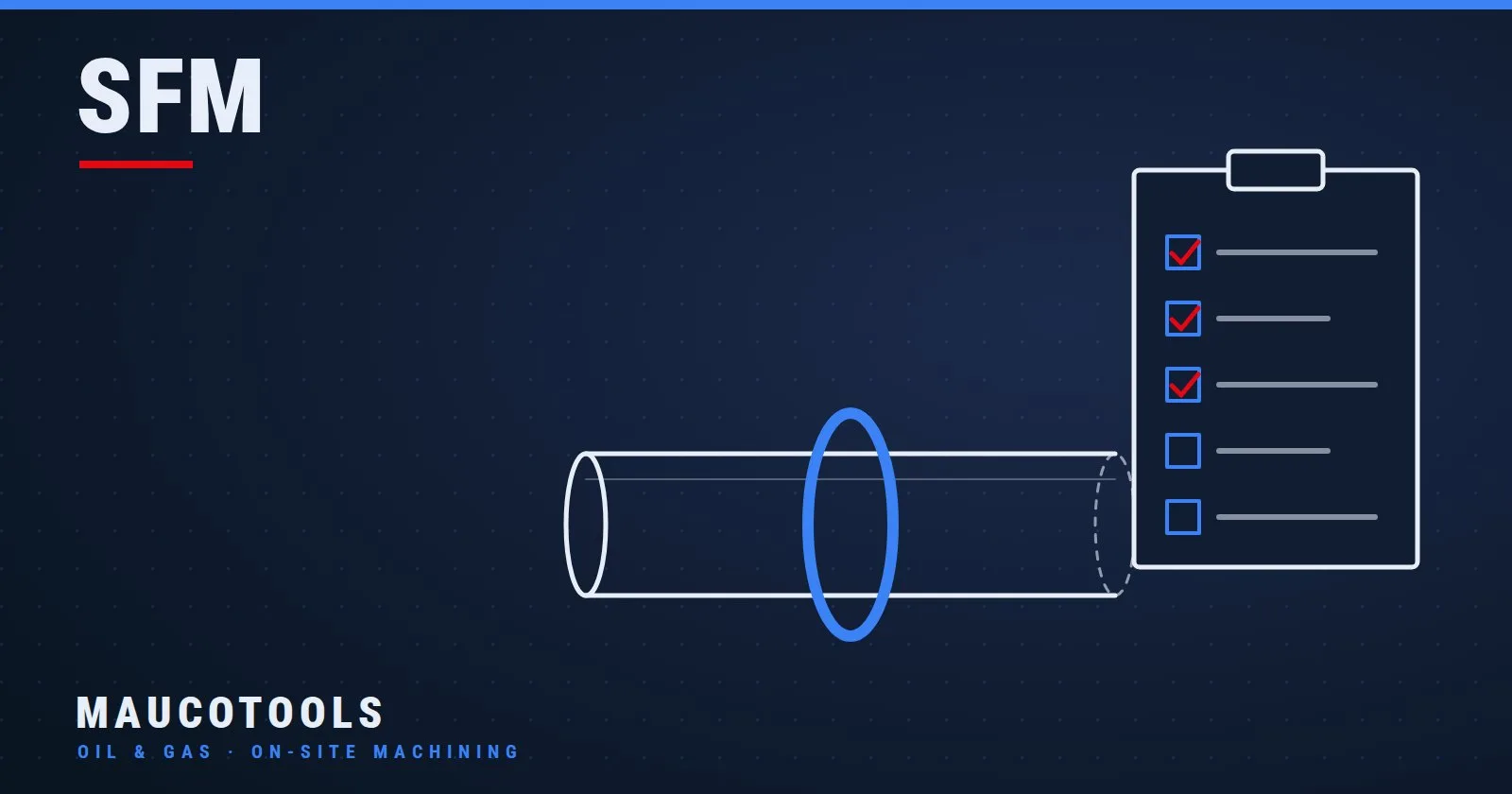
A practical cold cutting pipe method statement usually covers:
- Scope and isolation. The line and cut location, plus proof it is isolated, drained, vented, and de-pressurized (lock-out/tag-out) before any clamp goes on.
- Why no hot-work permit. A statement that the method is cold and flameless — no ignition source — so a hot-work permit and fire-watch are not required, subject to site rules.
- Hazardous-area suitability. Confirmation the work suits a live or classified area, with the drive chosen accordingly — pneumatic or hydraulic where an electric motor is a concern.
- Equipment and setup. The machine model, tooling, the concentric clamping check, and the cut-and-bevel parameters.
- PPE and personnel. Required PPE, the competency of the operator, and roles for the lift and setup.
- Chips and housekeeping. Handling of chips and cutting fluid — with no molten slag or grinding sparks to manage, unlike hot work.
The recurring theme is that cold cutting removes the biggest control a hot cut needs. No flame means the top risk on the paperwork — ignition on a hydrocarbon line — is engineered out from the start.
Cold cutting pipe: frequently asked questions
Is cold cutting better than hot cutting?
For repairs and weld prep on live or hazardous lines, usually yes. Cold cutting is flameless, so it leaves no heat-affected zone, needs no hot-work permit, and returns a weld-ready bevel in one operation. Hot cutting stays faster on scrap or open-ended work where heat and a HAZ do not matter.
Do you need a hot-work permit for cold cutting?
Generally no. Because cold cutting uses a rotating tool bit rather than flame, plasma, or an abrasive disc, there is no ignition source, so a hot-work permit and fire-watch are typically not required. Always confirm against your site's permit-to-work system.
Can you cut and bevel a pipe at the same time?
Yes. An orbital split-frame machine such as the Maucotools SFM parts the pipe and machines the weld bevel in a single operation, producing uniform, radiographic-welding-standard bevels ready for fit-up — with no separate beveling step.
What pipe sizes can be cold cut?
Maucotools offers six SFM split-frame models spanning 2" to 60" outside diameter: SFM-26, SFM-612, SFM-1218, SFM-1824, SFM-2432, and SFM-4860. Each is available in pneumatic, electric, or hydraulic drive.
Is cold cutting safe on pipes in service?
The cutting process is flameless and cool, which is why it suits live and classified areas. The pipe itself must still be properly isolated, drained, and de-pressurized before cutting — cold cutting removes the ignition risk, not the need to make the line safe.
Cold cutting comes down to one trade: a rotating tool bit in place of a flame. That single change removes the heat-affected zone, the hot-work permit, and the trip to the shop — and returns a weld-ready bevel in the same pass that severs the pipe. For in-service oil and gas and process lines, that is the difference between a permit-heavy shutdown and a controlled repair.
To match a split-frame SFM to your pipe schedule and drive, or to talk through a specific cold cutting job, reach the Maucotools technical team. Always isolate, drain, and de-pressurize the line and follow the manufacturer's operating instructions before any cut.