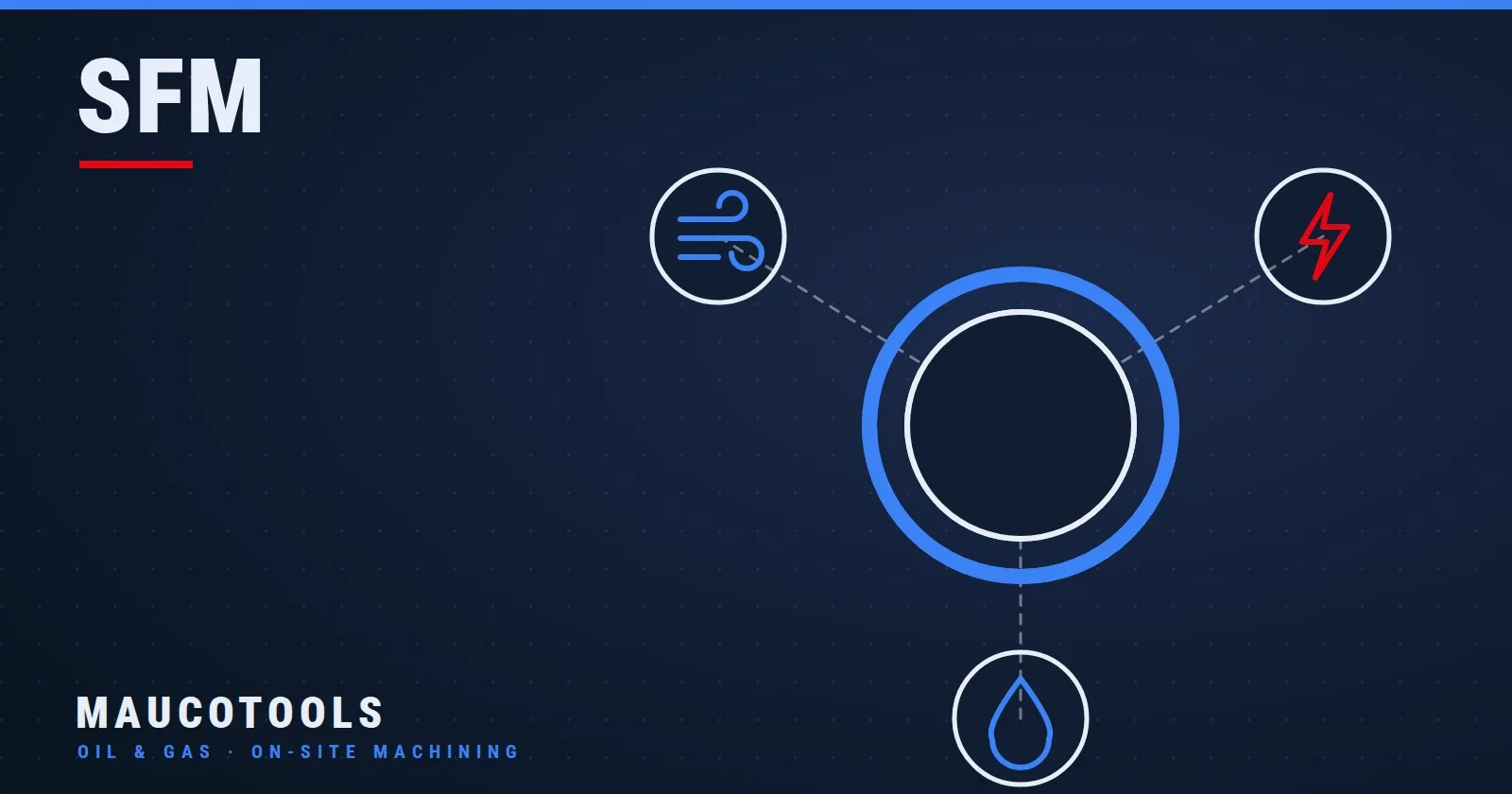
A pipe cold cutting machine severs and bevels an in-line pipe in place, cold and without flame. The Maucotools SFM ships in three powered drives — pneumatic, electric and hydraulic. Choose pneumatic for spark-free work where air is on hand, electric where power outlets exist, and hydraulic for the highest torque on large, heavy-wall pipe.
Cutting a pipe in the field used to mean a hacksaw, a chain cutter, or a grinder — slow, out of square, and no weld-ready bevel at the end. A powered orbital machine clamps around the pipe and does that work squarely and repeatably.
The decision most crews wrestle with is not whether to go powered, but which drive to run and how portable the machine needs to be. This guide walks through both, with the numbers that matter.
What is a pipe cold cutting machine?
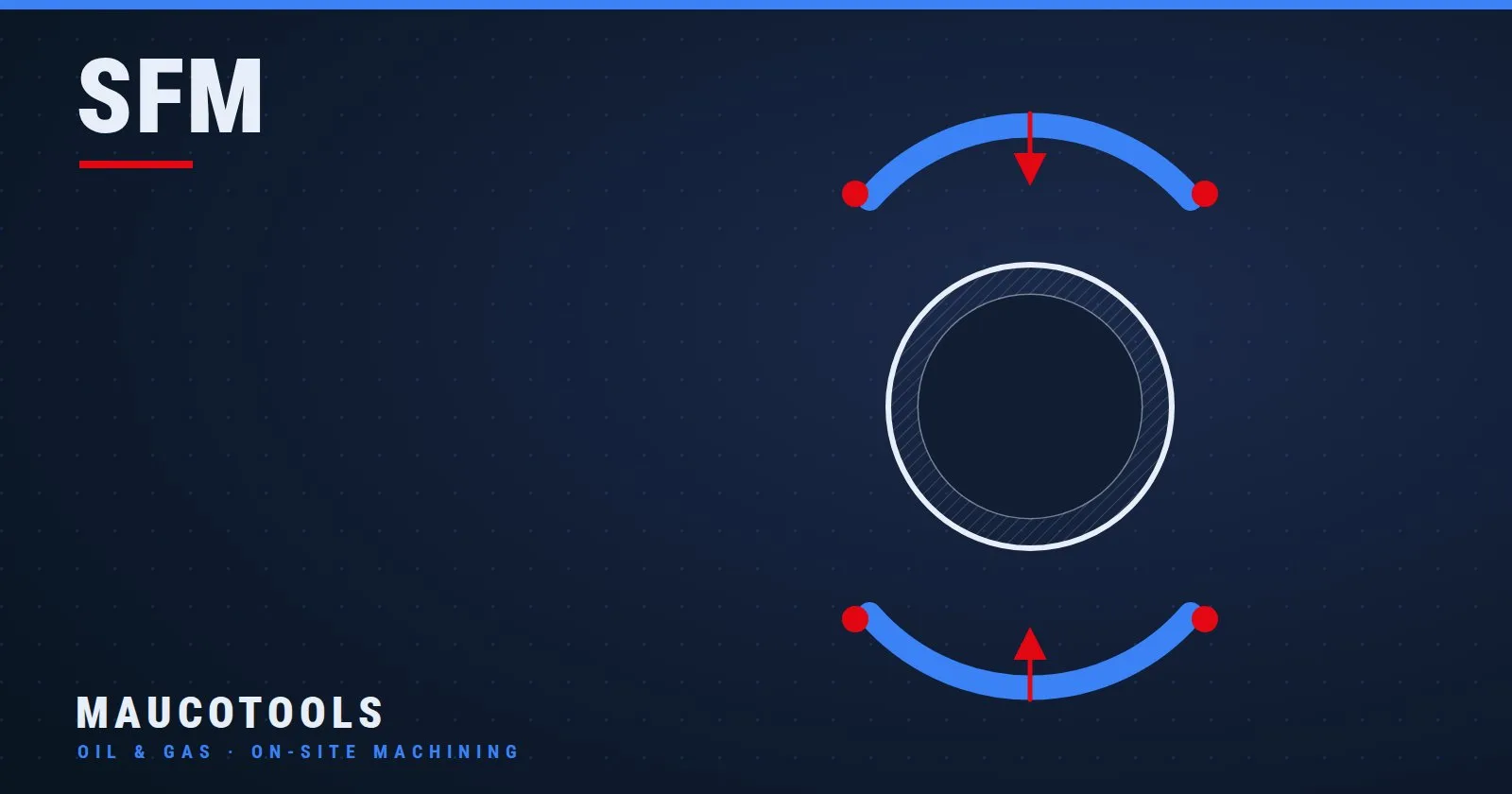
A pipe cold cutting machine is a portable tool that clamps around an in-line pipe and machines through the wall with a cutting tool, producing no flame and no sparks from the cut itself. The Maucotools SFM uses an orbital split-frame design: the frame splits open, wraps the pipe, and rotates a tool block around it.
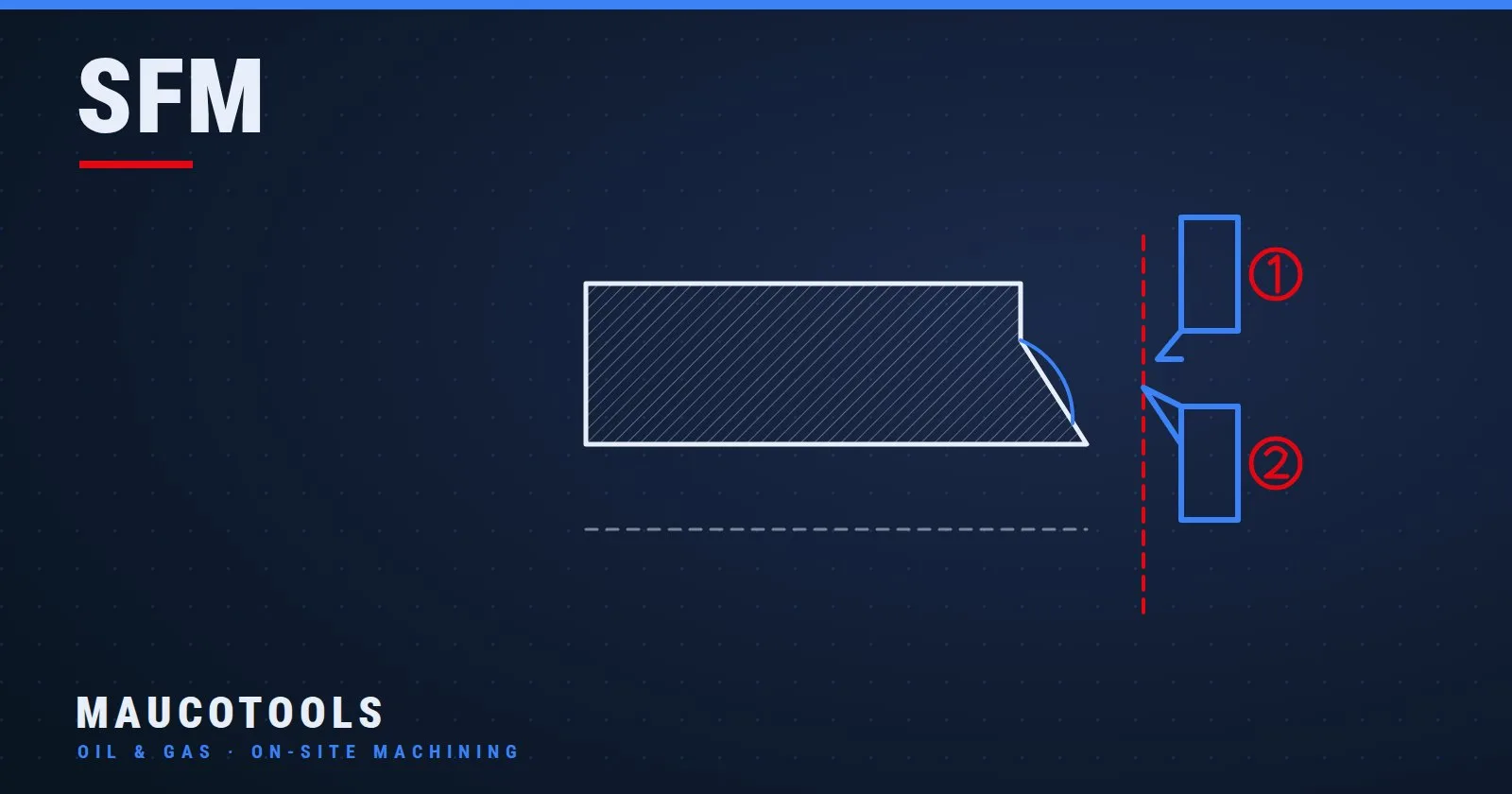
Because the cut is mechanical, there is no gas or abrasive disc consumption, and the same pass can leave a finished bevel ready for re-welding. That matters on live sites — refineries, pipelines, offshore platforms — where an open flame means a hot-work permit and grinding means airborne grit.
The whole point is that the machine goes to the pipe. You do not remove a spool, you do not ship anything to a shop, and you do not wait. The full SFM pipe cutting range scales the same split-frame body up through the diameters.
Manual pipe cutting vs a powered orbital machine
Manual pipe cutting covers any method driven by hand: a hacksaw, a rotary chain cutter clamped and cranked around the pipe, or a handheld grinder with a cutoff wheel. They all work on small, light lines, and they all hit the same walls as the pipe grows.
- Speed: hand feed is slow, and it gets slower as wall thickness climbs.
- Squareness: a hacksaw or grinder wanders, leaving a cut that is out of square and hard to fit up.
- No weld-ready edge: you get a cut, not a bevel — beveling becomes a separate second job.
- Large OD: past a few inches, hand methods turn impractical and unsafe.
A powered orbital machine answers all four. The tool feeds under power at a controlled speed, the split frame holds the cut square to the pipe axis, and one setup can cut and bevel in a single operation. The SFM is powered by design — there is no manual SFM — because its whole value is taking the muscle and the guesswork out of the cut.
Pneumatic vs electric vs hydraulic: choosing the drive
Every SFM model ships in all three drives. The frame and the cutting geometry stay the same; only the power source changes. Using the SFM-26 (the 2"–6" model) as a reference point, here is how the three compare.
Pneumatic (air)
The SFM-26 pneumatic drive is rated at 4 HP. Air motors are spark-free and tolerate wash-down, so pneumatic is the default in refineries and offshore where compressed air is already piped to the work area. If your site runs on air and atmosphere control matters, this is the drive.
Electric
The SFM-26 electric drive is rated at 1.5 kW. Electric fits where mains power or a generator is available and compressed air is not — common on fabrication yards and inland maintenance jobs. It is clean, quiet, and needs no compressor.
Hydraulic
The SFM-26 hydraulic drive is rated at 5 HP on a 3-phase supply and delivers the highest torque of the three. That headroom is what you want on the largest diameters and heaviest wall thicknesses, where the tool has to keep feeding through a lot of steel without stalling.
Across all three, the SFM-26 turns at roughly 34–37 rpm with no load and weighs 17.5 kg (38.5 lb) net, so the drive choice changes how the machine is powered, not how it handles. Because a clean bevel can run straight into fit-up, dedicated pipe bevelling machines cover edge prep on the heaviest walls.
Not sure which drive and model your line calls for? Match pipe size and drive in the configurator and get a spec sheet in minutes.
Portability and pipe size: matching the SFM model
The SFM range spans six models by outside diameter, from the SFM-26 at 2"–6" up to the SFM-4860 at 48"–60". Smaller models are portable and single-operator; as the diameter climbs, the frame and the crew scale with it.
Portability is the whole proposition. A 17.5 kg machine a technician can carry to a fixed line and clamp in situ removes the biggest cost in the job — not the cut, but the downtime of taking the line out of service. No spool to cut out, no transport, no shop queue.
When you weigh a portable machine against sending the work out, put a number on the hours the line stays in service. The ROI calculator turns avoided downtime into a figure you can bring to a purchase decision.
Frequently asked questions
Is there a manual version of the SFM?
No. The SFM is a powered orbital machine and ships only in pneumatic, electric, or hydraulic drive. Manual methods like a hacksaw or chain cutter are a different class of tool; the SFM exists to replace them with a square, weld-ready cut under power.
Which drive is best for a refinery or offshore platform?
Pneumatic, in most cases. Air motors are spark-free and stand up to wash-down, and compressed air is usually already available at the work site. Electric and hydraulic stay on the table where air is not piped in or where more torque is needed.
What size pipe can a portable cold cutting machine handle?
The SFM range covers 2" to 60" outside diameter across six models. The SFM-26 handles 2"–6"; larger models step up from there to the SFM-4860 at 48"–60". Diameter is what drives model selection.
Why choose cold cutting over a torch or abrasive wheel?
Cold cutting produces no flame and no sparks from the cut, so it suits live and hazardous areas without hot-work constraints. It also leaves a clean, machined bevel in the same pass, with no gas or abrasive disc consumption.
Choosing a pipe cold cutting machine comes down to two questions: which drive your site can power and control — pneumatic for spark-free air jobs, electric where outlets exist, hydraulic for the most torque — and which SFM model matches your pipe diameter. Get those right and the machine does the rest, in place and weld-ready.
To match a model and drive to your line, or to talk through a specific job, contact the Maucotools technical team.
Cutting into in-service or pressurized pipe carries real risk: isolate and depressurize the line and follow the manufacturer's operating instructions before any cut.