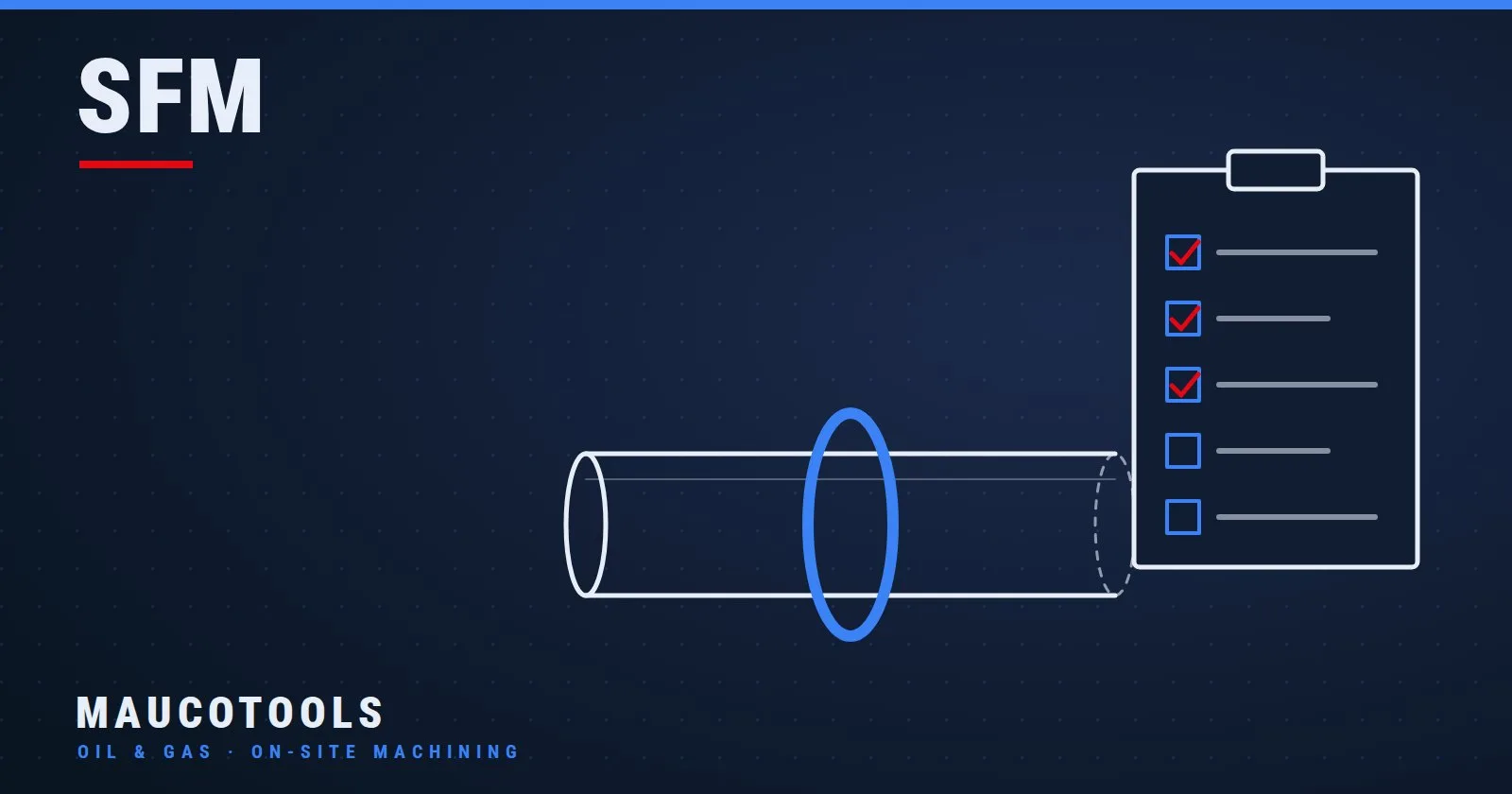
A split-frame pipe cutting machine is a portable tool that clamps around a pipe in two halves and drives an orbiting cutter around the outside diameter to sever it cold, in place. "Clamshell" and "split-frame" name the clamping housing; "orbital" names the tool motion. The Maucotools SFM is all three.
For maintenance crews in oil and gas, power, and process plants, the value sits in two of those words: cold and in place. The pipe never leaves the line, and no flame ever touches it — which removes the heat-affected zone, the fire permits, and the post-cut rework that thermal methods drag along.
What "split-frame," "clamshell," and "orbital" actually mean
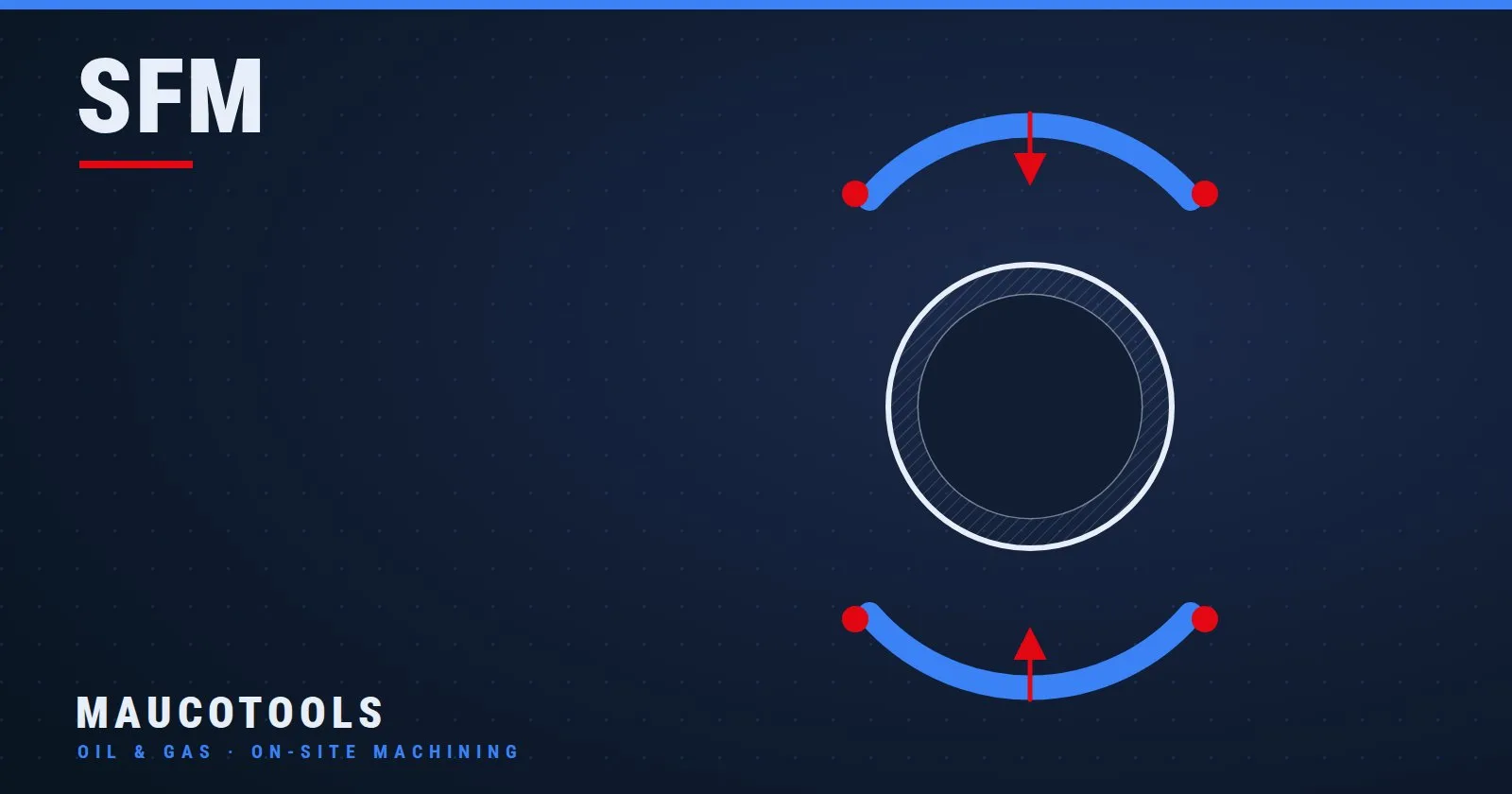
The three terms describe one class of machine from different angles. A split-frame — also called a clamshell — machine has a two-half housing that opens, wraps around an in-line pipe, and closes, so it mounts without threading over a pipe end.
Orbital describes what happens next: a tool ring rotates around the pipe's outside diameter and carries the cutter through a full 360 degrees. So a clamshell pipe cutter and an orbital pipe cutting machine are not competing products — they are two views of the same tool.
"Clamshell" and "split-frame" answer how the machine clamps; "orbital" answers how it cuts. The Maucotools SFM orbital split-frame cutter is all three at once.
How the split-frame cutting mechanism works
Once the two halves clamp around the pipe, the orbiting ring feeds a cutting tool into the wall as it rotates. The cut is made by a single-point tool removing metal — a machining operation, not a burn. Maucotools rates this as cold cutting: no gas or abrasive disc consumption, and no heat-affected zone on the finished ends.
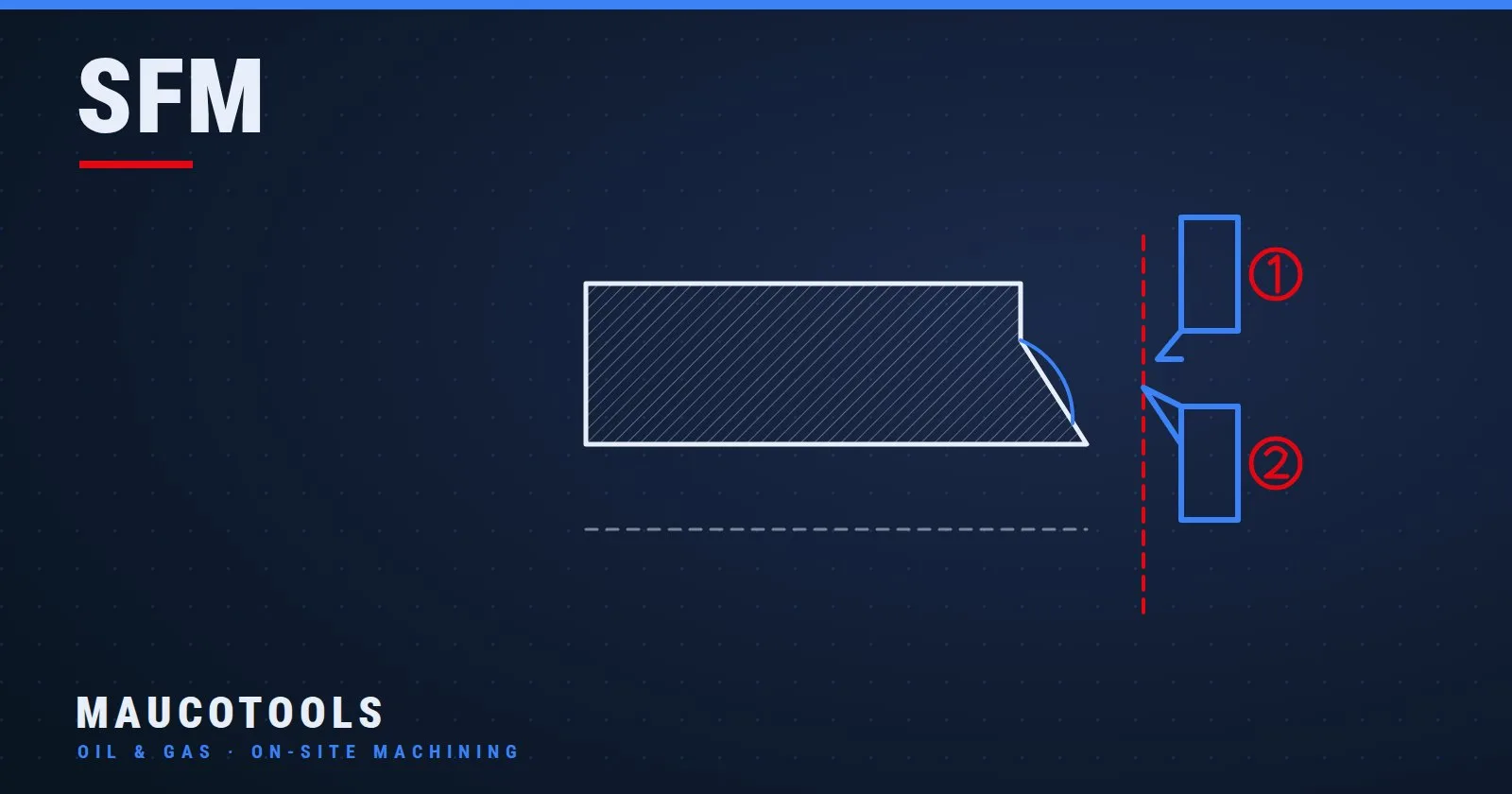
Because it is a machine tool, the SFM can cut and bevel in one operation. The same pass that severs the pipe leaves a uniform, weld-ready bevel prepared to radiographic-welding-standard geometry. With a torch or a grinder, that bevel is a second, hand-finished job.
The frames are built to be carried and rigged by hand. The smallest model, the SFM-26, has a net weight of 17.5 kg (38.5 lb) and is designed for a single operator. Mid-range frames run heavier — roughly 24 kg for the SFM-612 and 38 kg for the SFM-1218 — but stay in portable, in-situ territory.
Split-frame vs. handheld cutters and thermal cutting
The reason plants reach for a split-frame machine instead of a faster hand tool comes down to diameter, end quality, and heat.
Versus handheld and chain pipe cutters
Wheel cutters, chain cutters, and cut-off grinders are quick on small, thin-wall pipe, but they hit limits on plant work:
- Diameter: a wheel or chain tool runs out of capacity long before large-bore pipe.
- End quality: they leave a parted end, not a machined bevel, so a separate beveling step follows.
- Consistency: cut quality depends on the operator's hand, not a fixed rotating tool path.
Versus flame and abrasive cutting
Oxy-fuel torches and abrasive discs are fast, but they cut hot:
- Heat: a flame creates a heat-affected zone that can force machining or re-beveling before welding.
- Consumables and permits: gas and discs are consumed on every cut, and hot work needs fire watch and permits.
- Cold alternative: the SFM removes metal mechanically, so there is no HAZ and no gas or abrasive disc consumption.
Sizing a Maucotools SFM by outside diameter
The SFM range is organized by pipe OD, so sizing starts with the outside diameter you need to cut. Six frames cover 2" to 60":
- SFM-26 — 2"–6" OD (clamping 50.8–152.4 mm), about 34–37 rpm, 17.5 kg (38.5 lb).
- SFM-612 — 6"–12" OD, about 24 kg.
- SFM-1218 — 12"–18" OD, about 38 kg.
- SFM-1824 — 18"–24" OD, about 48 kg.
- SFM-2432 — 24"–32" OD.
- SFM-4860 — 48"–60" OD.
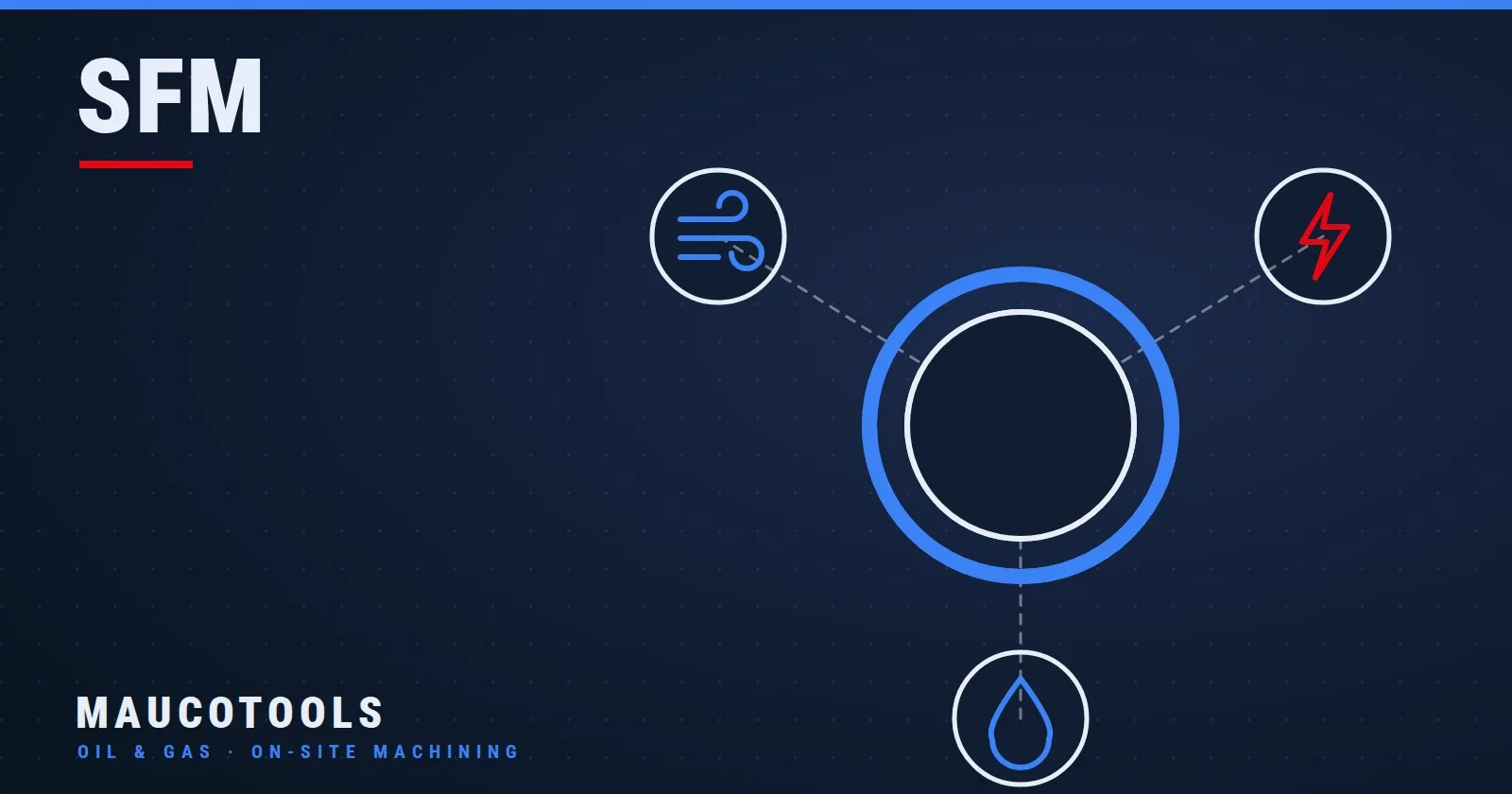
Each frame comes in three drive versions, so the machine matches the power on site: pneumatic, electric, or hydraulic. On the SFM-26, that is a 4 HP pneumatic, a 1.5 kW electric, or a 5 HP hydraulic drive — the SFM is a powered machine, not a manual ratchet cutter.
To match a frame, drive, and OD to your line, the online configurator walks through the options.
For work beyond parting — restoring a worn bore or bearing seat in place — Maucotools Dual System line boring machines bore and weld-repair in situ; for end preparation on already-cut pipe, the PBM pipe beveling machines handle the bevel alone.
Frequently asked questions
Is a clamshell pipe cutter the same as an orbital pipe cutting machine?
Yes. They describe the same machine. "Clamshell" and "split-frame" refer to the two-half housing that clamps around the pipe; "orbital" refers to the tool ring that rotates around the OD. The Maucotools SFM is a clamshell/split-frame machine that cuts orbitally.
Does split-frame cutting really avoid a heat-affected zone?
Yes. A split-frame machine removes metal with a single-point tool rather than melting it, so it is a cold-cutting process. There is no flame and no heat-affected zone, which is why the ends come out weld-ready without the rework a torch cut often needs.
Can one machine both cut and bevel the pipe?
Yes. The SFM cuts and bevels in a single operation. The same orbital pass that severs the pipe leaves a uniform, weld-ready bevel prepared to radiographic-welding-standard geometry, removing the separate beveling step.
What pipe sizes can the Maucotools SFM handle?
The range covers 2" to 60" OD across six frames, from the SFM-26 (2"–6") up to the SFM-4860 (48"–60"). Each frame is available with pneumatic, electric, or hydraulic drive.
Do you have to take the pipe out of the line to use it?
No. The machine clamps around the pipe where it sits and machines it in place. Nothing is removed, transported, or sent to a shop, and there is no flame — the whole point of an in-situ split-frame tool in a live plant.
Split-frame, clamshell, and orbital are three labels for one idea: clamp a machine around a pipe and cut it cold, in place, with a weld-ready end. For plant maintenance, that means no removed spools, no fire permits, and no heat-affected zone to machine back out.
To weigh what a cut-and-bevel-in-one operation saves against your current method, run the numbers in the ROI calculator. As always, isolate and depressurize the line and follow the manufacturer's instructions before any in-situ cut.