Published prices for a pipe cold cutting machine are unreliable, and the figures you find online rarely match what you will actually pay. Real cost depends on machine size (pipe OD), drive type, options, tooling, delivery, and training. To compare suppliers fairly, you need a tailored quote built around your pipe, not a single headline number.
Buyers searching for a pipe cold cutting machine price usually find a wide spread of numbers with no clear basis for comparison. The reason is simple: these machines are configured, not sold off a shelf. Two quotes for a nominally identical machine can describe very different scopes of drive, tooling, and support.
What is a pipe cold cutting machine?
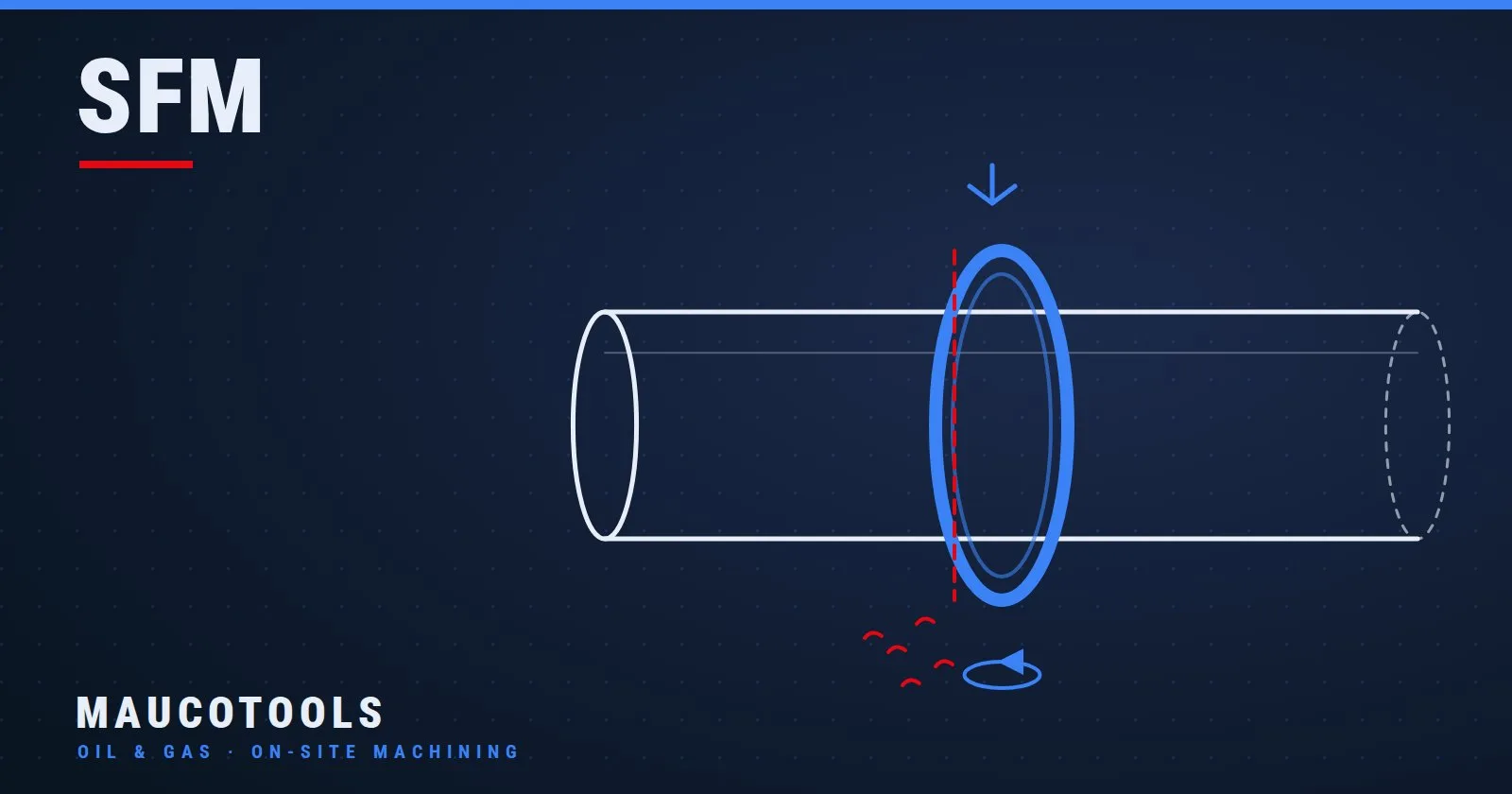
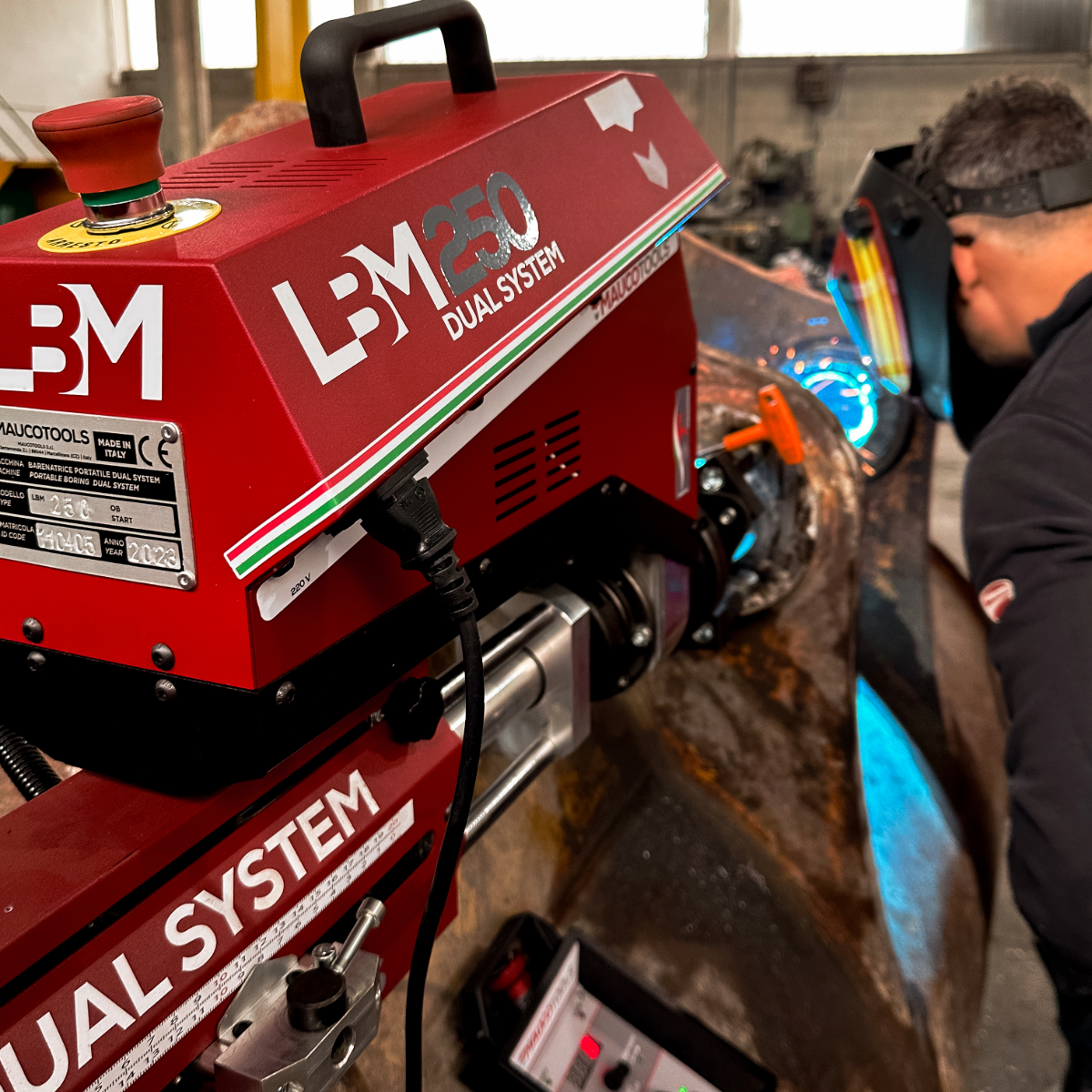
A pipe cold cutting machine is a portable tool that clamps around an in-line pipe and machines it in place, cutting through the wall without flame or a heat-affected zone. The Maucotools SFM is an orbital split-frame model: it wraps the pipe, rotates around it, and performs the cut and the weld bevel in a single operation, leaving weld-ready, radiographic-compliant ends.
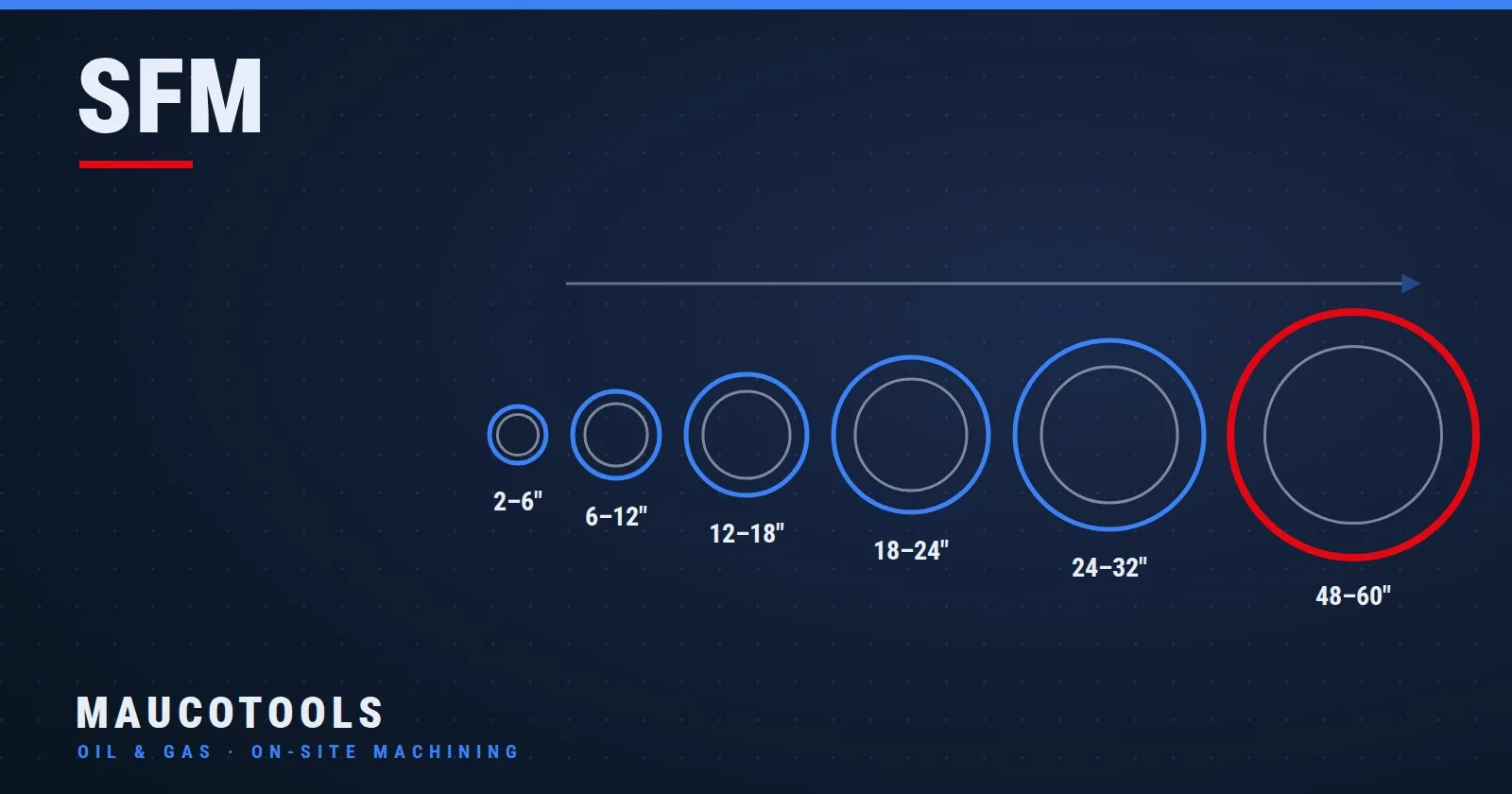
Because the process is cold and flameless, it fits live plants, hazardous areas, and alloy pipe where heat input is a problem. The SFM range covers pipe from 2 to 60 in. outside diameter across six frame sizes, so selection starts with your pipe, not your budget. You can see the full lineup on the pipe cutting page.
Cutting and beveling in one pass also matters for cost, because it removes a second setup and a separate pipe beveling step. Fewer operations mean less downtime, which is usually the largest number in the true cost of a job.
What determines the price of a pipe cold cutting machine?
No single figure defines the cost. Price is built from the configuration and the support wrapped around it. These are the factors that move it:
- Machine size (pipe OD). Frame size scales with diameter. The SFM-26 covers 2 to 6 in. pipe, clamps from 50.8 to 152.4 mm, and weighs 17.5 kg (38.5 lb); a frame for 48 to 60 in. pipe is a larger, heavier machine with more tooling. Bigger OD, higher cost.
- Drive type. Every SFM model ships in pneumatic, electric, and hydraulic versions. The SFM-26, for example, is offered as 4 HP pneumatic, 1.5 kW electric, or 5 HP hydraulic. The right drive depends on your site power and area classification.
- Options and tooling. Cutting and bevel tool bits, blade holders, and accessories are matched to wall thickness and material. Consumables recur across the machine life, so they belong in any real comparison.
- Delivery and logistics. Shipping, duties, and lead time vary by destination and by whether you buy factory-direct or through a local distributor.
- Training and support. Commissioning, operator training, and after-sales support carry value that a bare equipment price hides.
The figure that dominates total cost is usually not the machine, but the downtime you avoid by machining in place instead of sending pipe to a shop. Before you weigh quotes, put a number on that: the ROI calculator estimates the time and cost you save on a typical job.
How to choose a pipe cold cutting machine supplier
Once you know roughly which model fits, the supplier decides what that machine is worth to you over years of field service. Work through this checklist before you commit:
- Manufacturer-direct or reseller? Buying from the manufacturer removes a margin layer and puts you closer to engineering support, spare parts, and custom tooling. Resellers can add local value but rarely match factory lead times on parts.
- Tooling and spares availability. Ask how fast cutting bits, bevel tools, and wear parts ship. A cheap machine that sits idle waiting for a blade holder is an expensive machine.
- Lead time. Confirm build and delivery times in writing, and ask whether stock units exist for urgent shutdowns.
- Training and commissioning. Check what operator training is included and whether support is available in your language and time zone.
- Field track record. Ask where the machines are already in service. A supplier present across many countries has proven the range on different pipe grades and climates.
- Full scope of the quote. Compare what each quote includes, drive, tooling, spares, training, and delivery, rather than the headline figure alone.
Why buy from the manufacturer
Maucotools manufactures the SFM range directly in Italy. Founded in 2013 and present in more than 90 countries through 14 distributors, it sells factory-direct or through local partners, so you can choose the buying route that fits your project and location.
Buying from the manufacturer means the people who build the machine also support it: engineering answers, original tooling, and spare parts from the source. For a portable pipe cold cutting machine that has to perform on a live shutdown, that support chain is often worth more than a lower sticker price.
Frequently asked questions
How much does a pipe cold cutting machine cost?
There is no fixed price. Cost depends on the model, set by pipe OD, the drive type (pneumatic, electric, or hydraulic), and the tooling, options, delivery, and training. Published figures rarely reflect a real configured machine, so request a quote based on your pipe.
What size pipe cold cutting machine do I need?
Selection starts with outside diameter. The SFM range spans 2 to 60 in. OD across six frame sizes; the SFM-26, for instance, handles 2 to 6 in. pipe. Match the frame to your largest pipe, then confirm wall thickness so the tooling is correct.
Should I buy from a manufacturer or a reseller?
Both can work. Manufacturer-direct buying removes a margin layer and puts you closer to spare parts, tooling, and engineering support. A local distributor can add hands-on service. Maucotools offers both routes, so you can pick what suits your project.
Which drive should I choose, pneumatic, electric, or hydraulic?
It depends on your site power and area classification. Every SFM model ships in all three; the SFM-26, for example, is available as 4 HP pneumatic, 1.5 kW electric, or 5 HP hydraulic. Pneumatic suits many hazardous areas, while electric and hydraulic fit where that power is on hand.
Is cold cutting better than flame cutting for pipe?
For live plants, alloy pipe, and weld preparation, usually yes. Cold cutting adds no heat-affected zone and produces a weld-ready, radiographic-compliant bevel in the same pass. It also avoids ignition sources in hazardous areas.
The honest answer to the cost question is that it depends on your pipe and how you buy. Size the machine to your OD, choose the drive your site can power, and compare full-scope quotes, not headline figures, from a supplier that can support the machine for its full service life.
To get an accurate number, have your pipe OD, wall thickness, material, and available site power ready. Spec the machine in the configurator to request a tailored quote, or contact the Maucotools team for non-standard requirements or fleet pricing. As always, follow the machine operating instructions and your site safety procedures when working on live or pressurized lines.