Cold cutting pipe is the flameless, mechanical way to sever and bevel a pipe in place: a split-frame machine clamps around the pipe and machines through the wall with a cutting tool instead of a flame. Because there is no heat, there is no heat-affected zone — so the work can happen on live or hazardous lines.
For maintenance engineers and pipe fitters, the real cost of a cut is rarely the cut itself — it is the downtime around it. Sending a spool to the shop, waiting on a hot-work permit, or straightening thermal distortion after a flame cut all add hours or days. A cold cutting pipe machine removes those steps by doing the work in-line.
The reference points throughout this guide are the Maucotools SFM machines — orbital split-frame tools built for portable, single-operator work on pipe from 2 to 60 inches outside diameter. The principle is the same at every size: clamp the machine to the pipe, not the pipe to a machine.
What Cold Cutting Pipe Is — and Why Flameless Matters
Cold cutting is mechanical cutting. A hardened tool bit shears through the pipe wall as the machine rotates around it, the same way a lathe removes metal. There is no flame and no plasma arc, and no gas or abrasive disc consumption to manage. The cut is produced by cutting force alone.
The flameless part is the whole point on a working plant. A flame or plasma cut creates a heat-affected zone (HAZ), where the metal's structure changes near the cut, and it can distort the pipe out of round. Cold cutting leaves no HAZ and no thermal distortion, so the pipe stays dimensionally true and the adjacent metal keeps its properties.
With no ignition source and no sparks, cold cutting is usable in live and hazardous areas where hot work is restricted or banned — process lines still in service, refineries, and areas with a flammable atmosphere. That is why it is a default method for pipe repair and tie-ins across oil and gas.
A split-frame cold cutting machine also does two jobs in one pass. It cuts the pipe and machines the weld bevel simultaneously, so the pipe comes off the tool already prepped for welding — uniform, square, and clean enough to meet radiographic welding standards. There is no second setup and no grinding the bevel by hand.
How a Cold Cutting Pipe Machine Works
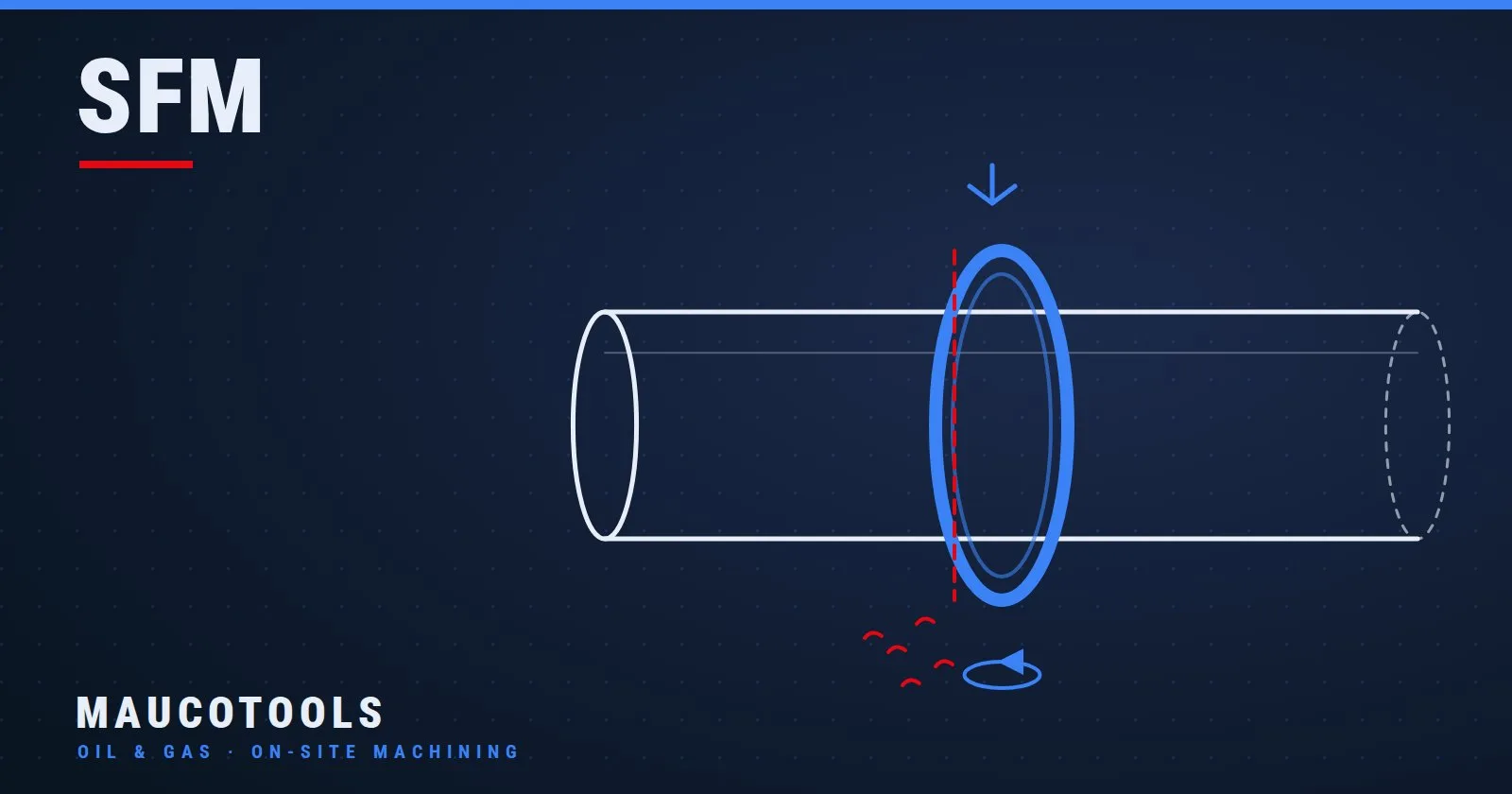
A cold cutting pipe machine is built as a split frame, also called a clamshell. The frame hinges open into two halves, wraps around a pipe that is already in the line, and closes back into a full ring. Nothing has to be threaded onto a pipe end, so it mounts on runs that are fixed at both ends.
Once clamped and centered, the machine works orbitally. A rotating ring carries the tool bits around the full circumference while a feed mechanism drives them steadily into the wall. Each revolution takes a controlled bite until the tool parts the wall completely — a machining process, not a fracture.
Mounting the cutter on the ring, rather than the pipe in a chuck, is what makes the method portable and in-situ. The orbital split-frame pipe cutting machines in the SFM range clamp to the pipe itself, so the pipe never moves — no rigging it out, no shipping it, no realigning it afterward.
The same ring can carry a bevel tool alongside the parting tool, which is how one pass delivers both the cut and the weld prep. For a bevel-only job on a pipe end that is already cut, the dedicated tool is a portable pipe bevelling machine — the Maucotools PBM — while the SFM is the choice when the same pass has to cut and bevel together.
Choosing a Cold Cutting Pipe Machine: Size by Outside Diameter
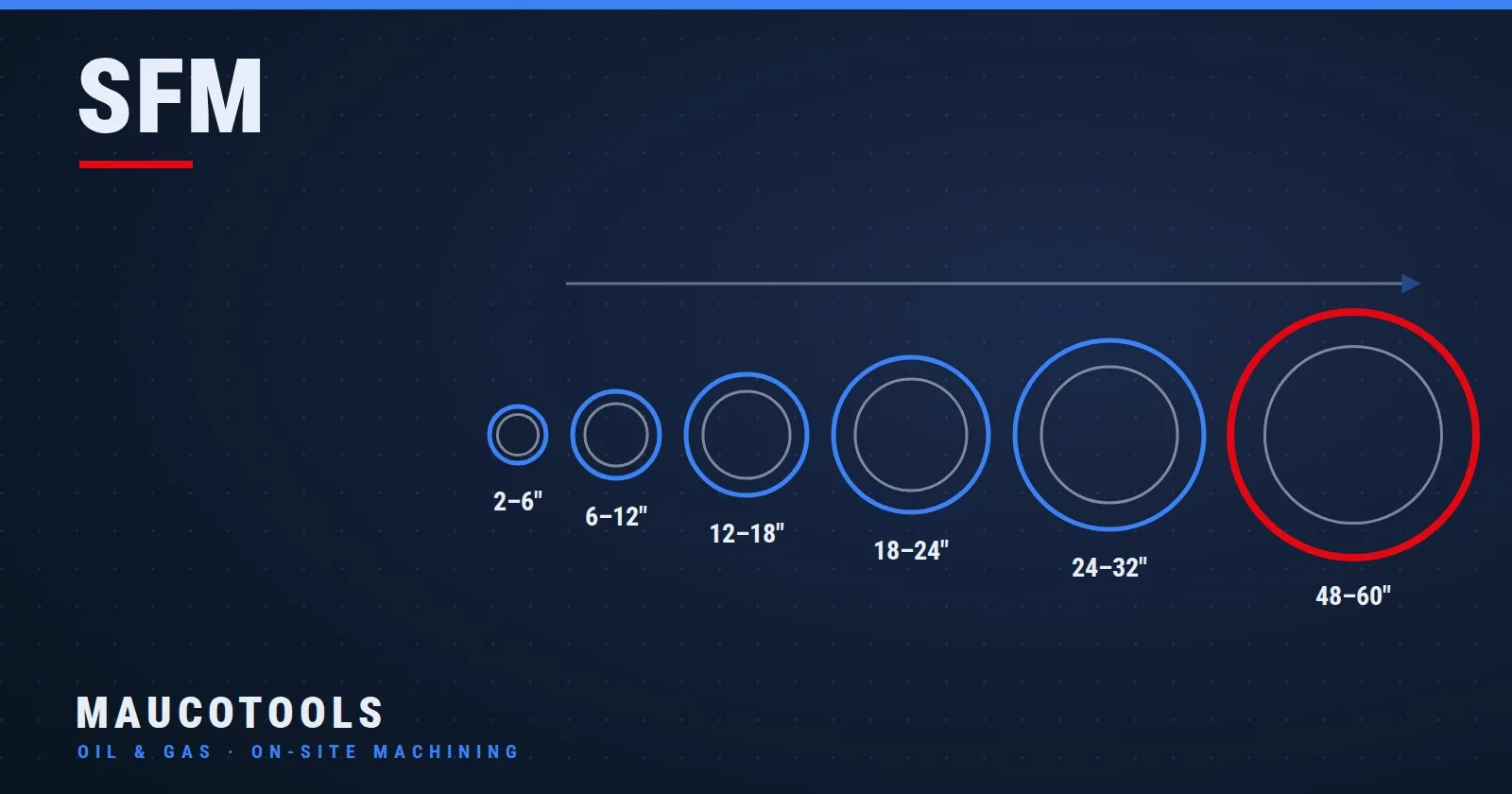
The first sizing question for any cold cutting pipe machine is outside diameter (OD), not nominal bore. The split frame has to match the actual OD of the pipe it clamps. The SFM line covers 2 to 60 inches across six models, each built for a band of diameters:
- SFM-26 — 2 to 6 in OD (clamping 50.8–152.4 mm)
- SFM-612 — 6 to 12 in OD
- SFM-1218 — 12 to 18 in OD
- SFM-1824 — 18 to 24 in OD
- SFM-2432 — 24 to 32 in OD
- SFM-4860 — 48 to 60 in OD
Weight climbs with size, which matters when one technician carries and mounts the machine, sometimes at height. The SFM-26 has a net weight of 17.5 kg (38.5 lb) and is genuinely single-operator portable; the SFM-612 is around 24 kg, the SFM-1218 around 38 kg, and the SFM-1824 around 48 kg. The larger frames usually call for a lifting plan.
As a reference point, the smallest model — the SFM-26 — clamps pipe from 50.8 to 152.4 mm (2 to 6 in), turns at roughly 34 to 37 rpm depending on the drive, and runs on a 4 HP pneumatic, 1.5 kW electric, or 5 HP three-phase hydraulic motor. The larger models offer the same three drives, sized to the bigger diameters they machine.
Matching model, drive, and tooling to a specific line is quickest with the Maucotools configurator, which narrows the SFM range to the outside diameter and site conditions you enter.
Pneumatic, Electric, or Hydraulic: Choosing the Drive
Every SFM model comes in three drive versions, and the choice is about the work site more than the machine. There is no manual SFM — rotation and feed are always powered, because parting a pipe wall by hand is neither accurate nor safe.
- Pneumatic — the common pick in refineries and on flammable-atmosphere lines: air motors suit hazardous areas and shrug off dust and moisture. They need a compressor with enough volume.
- Electric — convenient where clean three-phase power is on hand and the atmosphere is not classified as hazardous; quiet and steady.
- Hydraulic — the highest power density, favored on large diameters and heavy wall, and common offshore where a hydraulic power unit is already running.
Cold Cutting vs Hot Cutting vs Shipping to the Shop
Cold cutting earns its place by comparison. On a repair or tie-in, the three realistic options are cutting the pipe cold in-line, cutting it hot with flame or plasma, or cutting out a spool and sending it to a machine shop. Each carries a different cost.
Cold cutting in-line
The pipe stays put. No hot-work permit, no HAZ, no thermal distortion, and the bevel comes off machined and ready to weld. The machine is portable and single-operator at the smaller sizes. The trade-off is the setup time to clamp and center, and matching the frame to the OD.
Hot cutting with flame or plasma
Fast to start and light on fixturing, but it brings heat: a heat-affected zone, distortion that can pull the pipe out of round, and slag or dross that has to be ground back before welding. On many plants it also needs a hot-work permit and a fire watch — a non-starter on a live hydrocarbon line.
Cutting out a spool for the shop
A shop lathe gives a precise cut, but only after the pipe is rigged out, transported, machined, transported back, and refitted. That is days of downtime and a long chain of handling — the exact cost a portable pipe cold cutting machine is built to remove.
The pattern is consistent: cold cutting trades a few minutes of setup for the elimination of permits, heat damage, and transport. On a line that has to go back into service, that trade almost always favors machining the pipe where it sits.
Common Mistakes in Pipe Cold Cutting
Most problems with pipe cold cutting trace back to setup and tooling, not the machine itself. These are the ones that show up most often:
- Sizing by nominal bore instead of OD. The frame clamps the outside of the pipe, and a 6-inch nominal pipe is not 6 inches OD. Check the measured outside diameter before choosing the model.
- Skipping the centering step. If the machine is not concentric with the pipe, the cut wanders and the bevel angle varies around the circumference. Time spent squaring the frame comes back as a weld-ready joint.
- Under-powering the drive. An air motor starved of volume, or the wrong drive for a heavy wall, stalls and chatters. Match the drive — pneumatic, electric, or hydraulic — to the pipe and the site.
- Feeding too aggressively. Cold cutting is a series of controlled bites, not one deep plunge. Forcing the feed overloads the tool bits, spoils the finish, and shortens tool life.
- Neglecting the tool bits. Dull or chipped bits are the usual cause of a rough bevel. These pipe cold cutting tools are consumables — the cut is only as clean as the cutting edge.
Step by Step: How to Cold Cut a Pipe In-Line
The sequence is short, and most of the skill is in the setup:
- Measure and confirm the pipe OD, then select the SFM model whose band covers it and the drive that suits the site.
- Isolate and prepare the line per site procedure. Cold cutting removes the ignition risk, but the line still has to be handled to plan.
- Open the split frame, position it square on the pipe at the cut line, and close it into a full ring.
- Center and true the machine so the ring runs concentric with the pipe, then set the cut position along with the bevel angle and land.
- Connect the drive — air, power, or hydraulics — and set the feed and speed for the pipe material and wall thickness.
- Run the machine orbitally, letting the tool take controlled passes until it parts the wall and completes the bevel.
- Stop the feed, open the frame, remove the machine, and inspect the cut and bevel before fit-up and welding.
Cold cutting keeps the flame off the job, but live and pressurized lines carry their own hazards: always follow the site's isolation procedures and the machine's operating instructions.
Cold Cutting Pipe: Frequently Asked Questions
What is a cold cutting pipe machine?
A cold cutting pipe machine is a split-frame, or clamshell, tool that clamps around an in-line pipe and machines through the wall with a cutting tool instead of a flame. It cuts and bevels the pipe in place, with no heat, no heat-affected zone, and no gas or abrasive disc consumption.
Is there a manual version of the SFM?
No. Every SFM is powered — pneumatic, electric, or hydraulic. The rotation and feed are driven by a motor because parting a pipe wall accurately, and machining a uniform bevel, needs controlled powered rotation rather than hand force.
What pipe sizes can be cold cut?
The SFM range covers outside diameters from 2 to 60 inches across six models, from the SFM-26 (2 to 6 in) up to the SFM-4860 (48 to 60 in). The right model is the one whose diameter band matches the measured OD of the pipe.
Can you cold cut a pipe that is still in service?
Cold cutting is flameless and spark-free, which is why it is used in live and hazardous areas where hot work is restricted. Whether a specific line can be worked while in service depends on the site's isolation and permit procedures — the method removes the ignition source, not the need to follow plant safety rules.
Does cold cutting also prepare the weld bevel?
Yes. A split-frame cold cutting machine cuts and bevels in one operation, leaving a uniform, weld-ready bevel that meets radiographic welding standards. That removes the separate step of grinding or machining the bevel after the cut.
Cold cutting pipe comes down to a simple trade: clamp a portable machine to the pipe and cut it flameless and in place, instead of bringing heat to the line or hauling the line to a shop. The payoff is no heat-affected zone, a weld-ready bevel in the same pass, and a line back in service in hours rather than days.
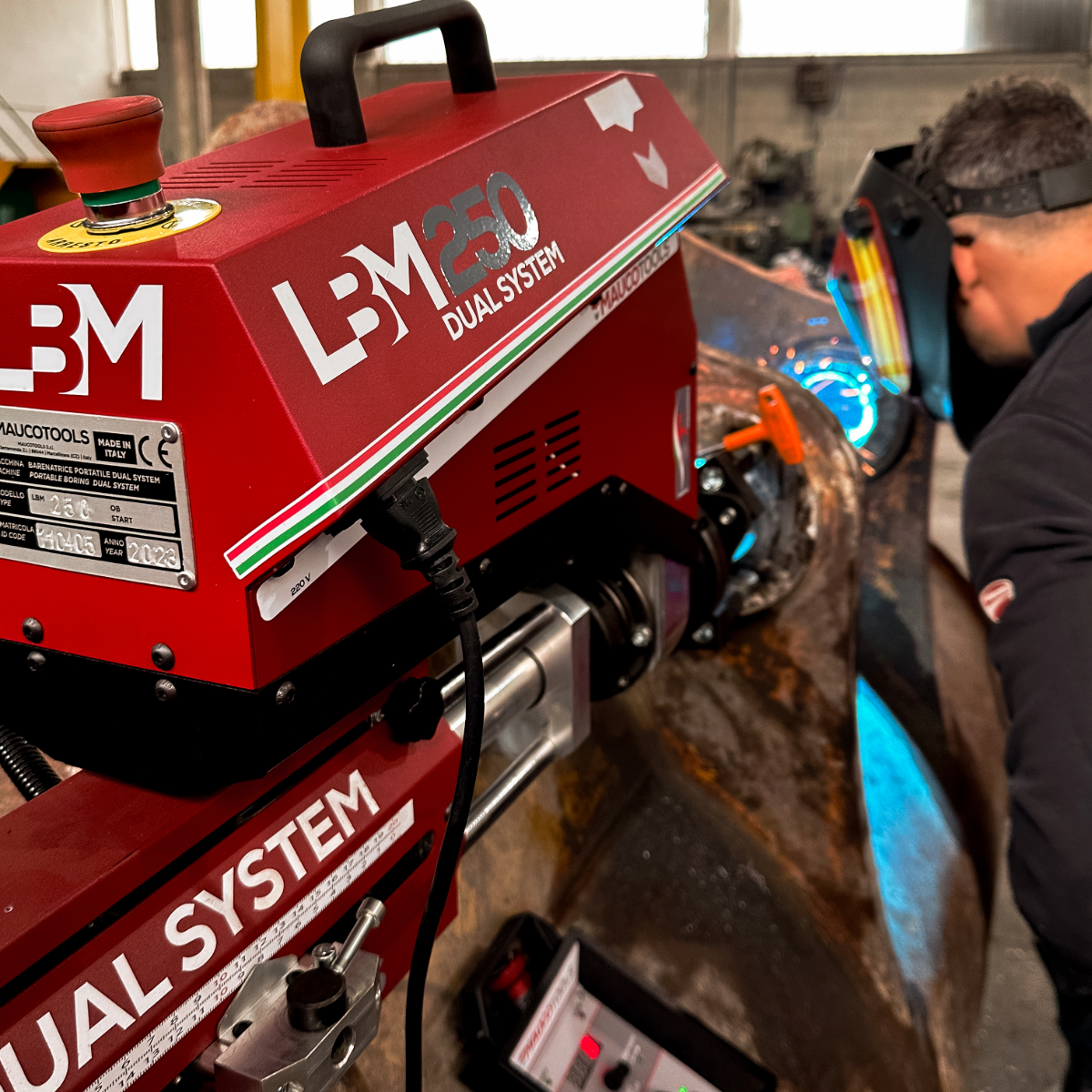
The same in-situ principle runs across the Maucotools portable range — from the SFM cold cutting machines to Dual System line boring for worn housings and bores. Machining the component where it sits, instead of moving it, is what keeps downtime down.
To put numbers on the downtime a cold cut avoids on your own line, run the figures through the Maucotools ROI calculator before your next tie-in or repair.