Case Study · Hydropower
In-situ restoration of a Francis turbine guide bearing
How a hydropower operator rebuilt and re-bored the guide-bearing seat of a 12 MW Francis hydro turbine on site with the LBM600 Dual System, bringing the unit back online in two days instead of weeks.
Client
Hydropower operator — confidential client, Italy
Plant
12 MW Francis turbine, run-of-river hydro plant
Machine
LBM600 Dual System, Maucotools
Result
Ø510 H7 seat restored, ~€45,000 saved
01 — The Protagonist
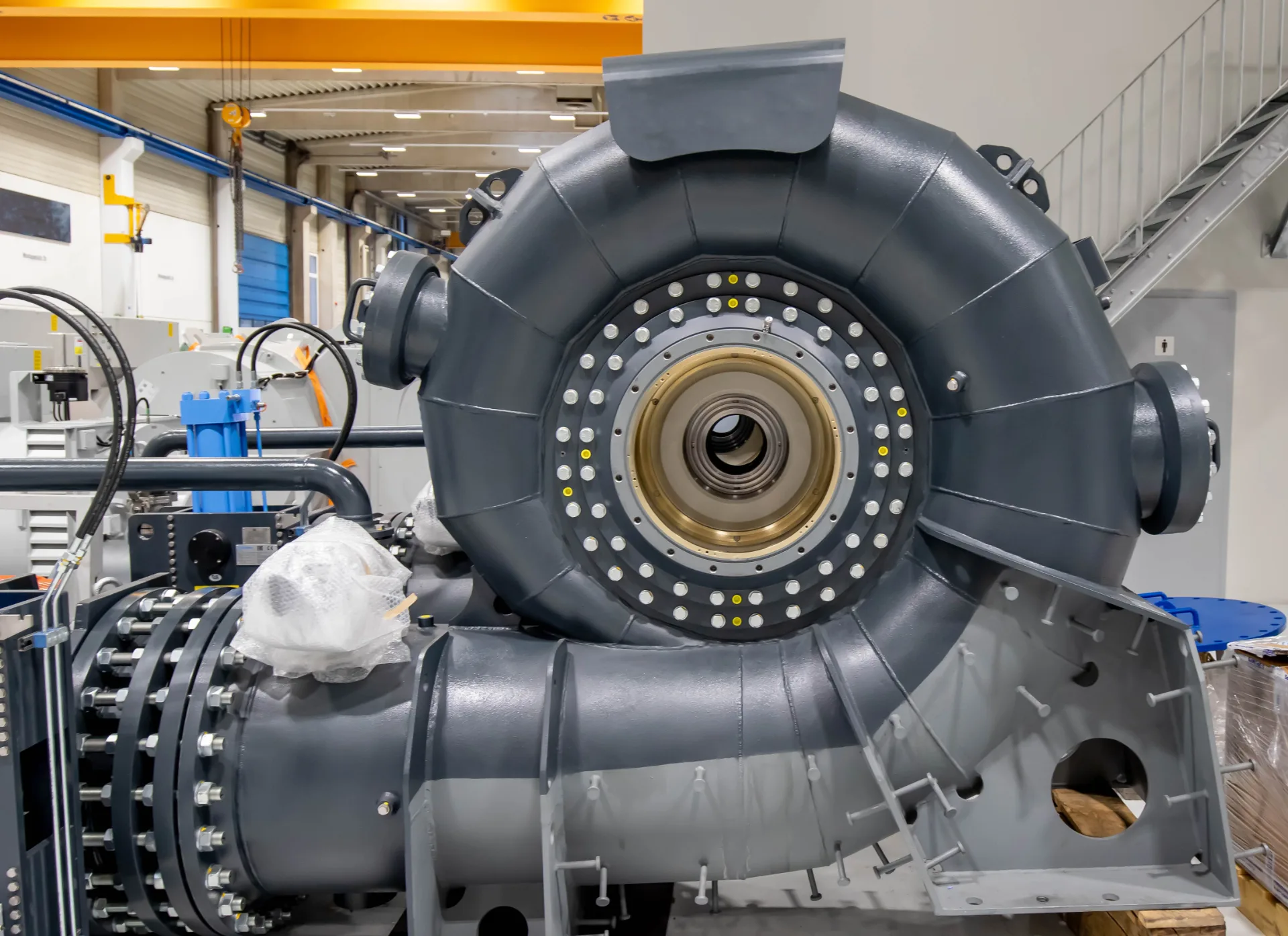
The 12 MW Francis turbine
Before the intervention, let's look at the unit we worked on. The Francis turbine is the heart of a high-head plant: it converts water energy into power at over 90% efficiency, but demands tight tolerances on its rotating parts.
12 MW
Rated power
Power fed to the grid by the unit at full load.
220 m
Net head
Hydraulic drop exploited by the turbine.
6.2 m³/s
Rated flow
Water processed by the runner at full output.
9,500 kg
Runner weight
Mass of the rotating assembly: complex and costly to dismantle.
02 — The Challenge
An ovalized seat, out of tolerance
After years of service, the turbine shaft guide-bearing seat had become ovalized and worn, causing abnormal vibration. The bore had to be brought back to nominal H7 dimensions to reseat the bearing, without dismantling and transporting the turbine head, a weeks-long job.
Ovalized seat
Diameter grew from Ø510.00 to Ø512.40 mm, with 0.4 mm ovalization.
Non-transportable component
The seat is integral to the turbine head: removing it would have required a crane, abnormal transport and weeks of downtime.
Severe tolerance
An H7 fit and concentricity to the machine axis were required: no room for error.
03 — The Solution
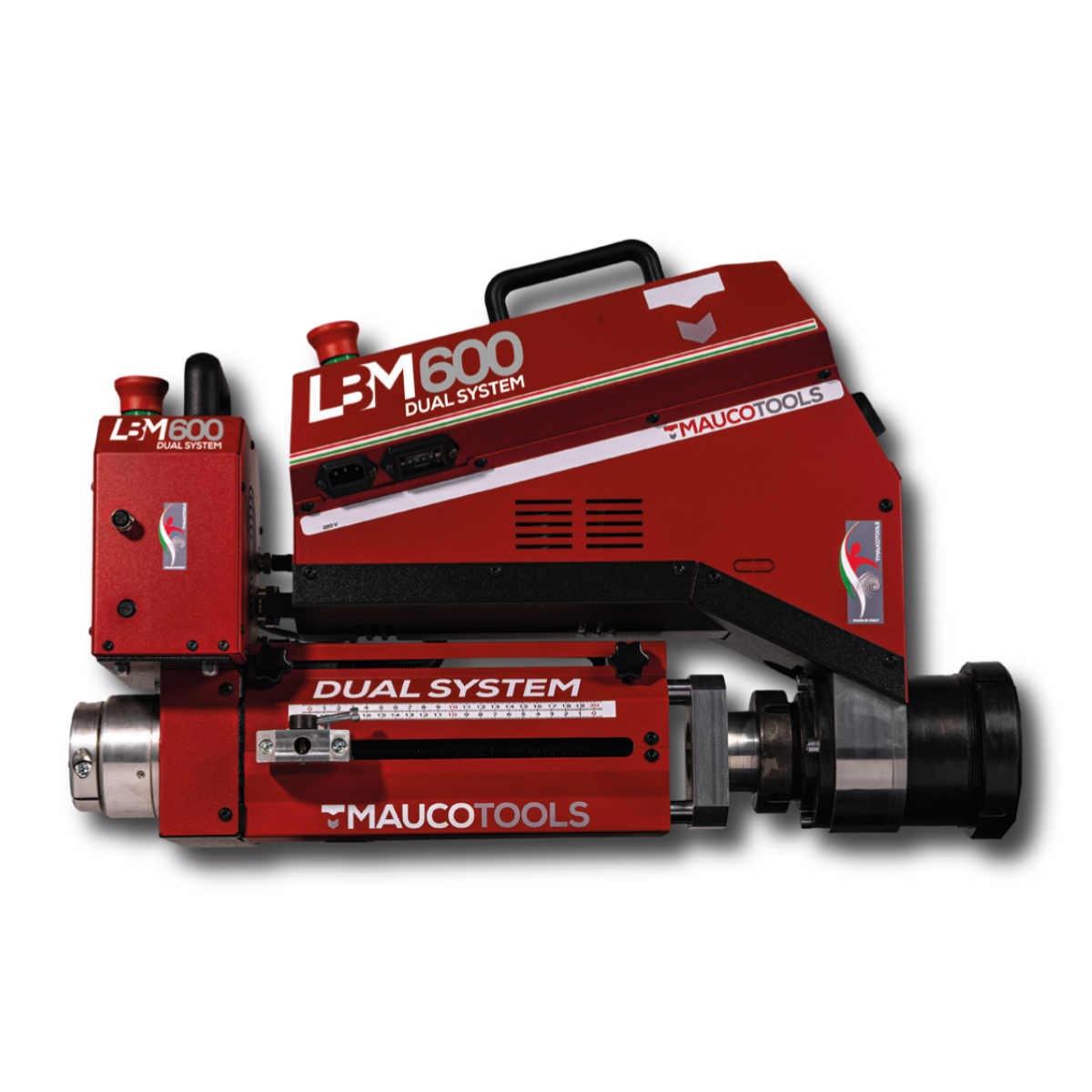
LBM600 Dual System, on site
For this job the client chose the LBM600 Dual System, Maucotools' portable line borer up to Ø600 mm, for its ability to weld-rebuild and re-bore the seat directly on the turbine, in a single setup and with no disassembly.
The Dual System advantage
Thanks to the independent Rotation and Feed modules, the operator carried out both the rotary weld build-up and the subsequent boring without repositioning the machine, keeping perfect coaxiality with the turbine axis.
Working at height, in tight spaces
The machine was mounted on the turbine head in a confined space, eliminating disassembly of the rotating assembly and transport of the component.
04 — The Procedure
The intervention step by step
Alignment and centering
The boring bar was centered and aligned to the turbine axis with the Maucotools centering kit, ensuring coaxiality of the new seat.
Seat preparation
A first boring pass removed the ovalization and cleaned the worn material, creating a regular surface for the build-up.
Rotary weld build-up
Using the feed module alone and the torch-holder shaft, the LBM600 deposited filler metal evenly along the whole seat, rebuilding the missing diameter.
Final boring to size
The seat was brought to Ø510 H7 with controlled finishing passes, achieving the surface finish required for the bearing.
Inspection and assembly
Dimensional and concentricity checks with measuring instruments, then fitting of the new bearing and return to service.
05 — The Results
Numbers that speak
Seat restored
Ø512.4 → 510.00 mm H7
Geometry recovered
Ovalization
< 0.02 mm
Concentricity restored
Plant downtime
3 weeks → 2 days
Unit back on the grid
By working on site, the client avoided dismantling and transporting the turbine head and brought the unit back into production in two days instead of three weeks. Between avoided lost generation, crane rental and abnormal transport, the LBM600 Dual System intervention saved around €45,000 in a single shutdown.
“Dismantling the turbine head would have meant weeks with the plant offline. With the LBM600 we rebuilt and re-bored the seat directly on the shaft, to H7 tolerance. Two days and the unit was back on the grid.”
— Maintenance manager — hydropower operator (confidential client)
A costly shutdown to avoid?
Tell us about your job: our engineers will assess whether the LBM600 Dual System can restore your large bores directly on site.